
Tag: AI business tools

  • Best AI Sales Forecasting Software for Small Businesses 2026

    Best AI Sales Forecasting Software for Small Businesses 2026

    Guessing your next quarter’s revenue is a gamble most small businesses can’t afford to lose.

    Stop Guessing, Start Forecasting: Why AI Changes Everything

    You’ve probably built a sales forecast on a spreadsheet at some point — pulling numbers from last year, applying a rough growth rate, and hoping for the best. It works until it doesn’t. A slow quarter, a lost key client, or a sudden market shift can make that spreadsheet look like fiction.

    Here’s the hard truth: according to Gartner, fewer than 50% of sales leaders report high confidence in their forecast accuracy, and for small businesses without dedicated revenue operations teams, that number is even lower. Inaccurate forecasting leads to overhiring, underordering, and missed cash flow planning — problems that can sink a small business fast.

    AI-powered sales forecasting software changes the equation. Instead of manual data entry and gut-feel estimates, these tools analyze your CRM data, historical trends, deal velocity, and even external signals like market conditions to generate predictions that actually hold up.

    In this guide, we cover the best AI sales forecasting tools built for small businesses in 2026 — what each one does well, what it costs, and who should use it.

    What Is AI Sales Forecasting Software?

    AI sales forecasting software uses machine learning algorithms to predict future revenue based on historical sales data, pipeline activity, rep behavior, and sometimes external market data. Unlike static spreadsheets, these platforms continuously learn and adjust predictions as new data comes in.

    The core idea is simple: instead of a human manually weighing each deal’s close probability, the software does it automatically — and at scale. Most tools integrate directly with your CRM (Salesforce, HubSpot, Pipedrive) and pull live data to generate rolling forecasts.

    Who uses these tools? Primarily sales managers, business owners, and CFOs at small-to-mid-size companies who need to make hiring, inventory, and budget decisions based on projected revenue. In 2026, even five-person sales teams use lightweight AI forecasting tools — they’ve become accessible enough in price and complexity that you don’t need an enterprise IT department to run them.

    The difference between a good forecasting tool and a great one comes down to data integration depth, model transparency (can you see why the AI made a prediction?), and how well it handles small datasets — a real challenge for businesses that don’t have years of CRM history.

    Key Features to Look For

    • CRM Integration: Native connections to HubSpot, Salesforce, Pipedrive, or Zoho so data flows automatically without manual exports.
    • Pipeline Analysis: Deal-by-deal scoring that flags at-risk opportunities before they go cold.
    • Historical Trend Modeling: Uses your past sales cycles to model seasonality, rep performance, and stage conversion rates.
    • Scenario Planning: Lets you run "what if" projections — what happens if you hire two more reps, or if your top client churns?
    • Explainable AI: Shows you why the model made a specific prediction so you’re not flying blind on the logic.
    • Mobile and Dashboard Access: Real-time visibility for business owners who aren’t sitting at a desktop all day.
    • Alert Systems: Notifications when deals deviate from expected close timelines or when overall pipeline health drops.

    According to Forrester, companies that use AI-guided forecasting see a 10–20% improvement in forecast accuracy within the first six months of deployment. For small businesses operating on thin margins, that accuracy gain translates directly into better financial planning.

    The Best AI Sales Forecasting Tools for Small Businesses in 2026

    1. HubSpot Sales Hub (with AI Forecasting)

    HubSpot has evolved its Sales Hub into a genuine forecasting platform, not just a CRM with a forecast tab bolted on. The AI forecasting layer — introduced and significantly improved over the past two years — pulls from deal stage history, contact engagement signals, and rep activity to generate weighted pipeline forecasts automatically.

    In our testing, the deal scoring accuracy was notably strong for businesses with at least 12 months of CRM history. The interface is clean and approachable, making it ideal for small business owners who are managing sales themselves without a dedicated ops team.

    What makes HubSpot stand out for small businesses is the all-in-one ecosystem. Your forecasting data lives in the same platform as your marketing, customer service, and sales tools — no integration headaches. The AI recommendations surface directly in the deal view, so reps see next-step guidance where they already work.

    Best for: Small businesses already using HubSpot CRM who want forecasting without adding another tool.

    Limitation: The deeper AI features require the Sales Hub Professional or Enterprise tier — the free plan won’t get you here.

    2. Clari

    Clari is one of the most recognized names in revenue intelligence, and while it historically targeted mid-market and enterprise teams, its current SMB-oriented packages have made it viable for growing small businesses — particularly those with 10+ reps and complex deal cycles.

    Clari’s AI ingests CRM data, email activity, call logs, and calendar data to build a real-time picture of pipeline health. Its "call to close" feature flags deals that are at risk of slipping based on engagement patterns — something spreadsheets simply can’t replicate. According to Clari’s own benchmarks, customers report up to 23% reduction in revenue leakage after deployment.

    The platform’s strength is its depth of signal processing. It doesn’t just look at CRM fields — it analyzes how often a prospect is engaging with your team and uses that activity data to adjust deal probabilities dynamically.

    Best for: Small businesses with dedicated sales teams ($500K+ ARR) that need enterprise-grade signal depth at a lower entry price.

    Limitation: Setup and onboarding require meaningful data hygiene. If your CRM data is messy, Clari’s predictions will reflect that.

    3. Pipedrive AI Sales Assistant

    Pipedrive has been the go-to CRM for small sales teams for years, and its built-in AI Sales Assistant is now sophisticated enough to serve as a lightweight forecasting layer for businesses that don’t need a standalone forecasting platform.

    The AI Sales Assistant analyzes your pipeline and gives you daily recommendations — deals to follow up on, activities that correlate with closed-won outcomes, and an automated forecast summary based on your current pipeline value and historical win rates. It’s not as deep as Clari or dedicated forecasting tools, but for solopreneurs and micro-teams, it covers the basics well.

    Pricing is Pipedrive’s real strength here. The AI features are included in the Advanced plan at roughly $27/user/month (as of mid-2026), making it one of the most affordable paths to AI-assisted forecasting.

    Best for: Freelancers, solopreneurs, and small teams (1–5 reps) who want forecasting without complexity or high cost.

    Limitation: Not a dedicated forecasting tool — scenario planning and deep pipeline analytics require exporting data or connecting a third-party tool.

    4. Salesforce Einstein Forecasting

    If your small business is already on Salesforce — or planning to grow into an enterprise stack — Einstein Forecasting is the most powerful option on this list. It uses machine learning to overlay AI-generated forecasts on top of manager-submitted forecasts, giving leadership a side-by-side comparison of human vs. AI predictions.

    Einstein Forecasting is trained on your Salesforce data and learns your specific sales cycles, product lines, and rep behaviors over time. The model becomes more accurate as it ingests more historical data — typically showing meaningful improvement after 90 days of use, according to Salesforce’s product documentation.

    The downside for small businesses is cost and complexity. Salesforce’s licensing model is expensive relative to alternatives, and getting Einstein Forecasting configured properly often requires Salesforce admin skills or a consulting partner.

    Best for: Small businesses that have already invested in Salesforce and have at least 6–12 months of clean CRM data.

    Limitation: High total cost of ownership. Not the right starting point for businesses new to CRM.

    5. Aviso AI

    Aviso is a specialized revenue intelligence platform that has carved out a strong niche in mid-market and upmarket SMBs. Its AI forecasting model is one of the most transparent in the category — you can drill into why the model assigned a specific win probability to any deal, which is critical for building trust with your leadership team.

    Aviso’s "Conversational AI" feature (added in 2025) lets sales leaders query their pipeline in natural language: "Which deals in Q4 are most at risk?" or "What’s our most likely revenue scenario if deal X slips?" — and get instant AI-generated answers backed by real pipeline data.

    According to IDC research cited by Aviso, companies using AI forecasting platforms close 15% more deals on average compared to those relying on manual forecasting. That’s a meaningful lift even for a 5-person sales team.

    Best for: SMBs with $1M+ ARR and a dedicated sales ops or revenue ops function who want maximum forecasting depth.

    Limitation: Pricing is not transparent and typically requires a custom quote — it may be out of reach for very early-stage businesses.

    If you’re also evaluating tools that automate other parts of your revenue stack, check out our guide to the Best AI Inventory Management Software for Small Businesses 2026 and the Best ERP Software for Small Businesses in 2026 — both integrate tightly with forecasting platforms.

    Pros and Cons of AI Sales Forecasting Tools

    Pros

    • Dramatically improved accuracy: AI models consistently outperform human judgment on forecast accuracy, particularly in volatile sales environments.
    • Real-time pipeline visibility: You’re not waiting for a weekly sales meeting to know your pipeline health — it’s live and always current.
    • Rep accountability: When the AI flags a deal as at-risk and your rep disagrees, it creates a productive conversation backed by data rather than opinion.
    • Time savings: Sales managers report saving 3–5 hours per week on manual forecast compilation once they’ve moved to an AI-powered platform.

    Cons

    • Data dependency: Every AI forecasting tool is only as good as the CRM data it ingests. If your team isn’t disciplined about data entry, the forecasts will be unreliable.
    • Learning curve: The AI needs historical data to learn — most tools take 60–90 days before predictions reach meaningful accuracy for small businesses with limited data history.
    • Cost at scale: Per-user pricing adds up quickly as your team grows. Run the math before committing.

    Best Use Cases: Who Should Use AI Sales Forecasting?

    Small business owners managing their own sales: Even solo operators benefit from lightweight AI forecasting. Pipedrive’s AI Assistant or HubSpot’s starter forecasting can help you plan cash flow without building complex models.

    Sales managers with 5+ reps: At this size, manual forecast rollups become a significant time sink. AI tools eliminate the weekly spreadsheet consolidation and give you real-time pipeline health data.

    CFOs and finance teams: AI forecasts give finance a more reliable revenue signal for budgeting, headcount planning, and investor reporting.

    B2B companies with longer sales cycles: If your average deal takes 60+ days to close, AI deal-scoring is especially valuable — it catches at-risk deals while there’s still time to intervene.

    Businesses with seasonal revenue patterns: AI models are particularly good at accounting for seasonality automatically, something spreadsheet-based forecasting handles poorly.

    Pricing and Plans Overview

    Here’s a quick breakdown of approximate pricing for each tool as of mid-2026:

    • HubSpot Sales Hub Professional: Starts at approximately $90/month (up to 5 users), with AI forecasting included. Enterprise tier required for advanced AI features.
    • Clari: Custom pricing — typically starts around $1,200/year per user for SMB packages. Requires a demo and sales conversation.
    • Pipedrive Advanced: Approximately $27/user/month — the most affordable entry point on this list with meaningful AI capability.
    • Salesforce Einstein Forecasting: Requires Sales Cloud (starting ~$75/user/month) plus the Einstein add-on. Total cost typically $150+/user/month for small teams.
    • Aviso AI: Custom enterprise pricing — expect a minimum contract of $15,000–$20,000/year for SMB packages.

    Value assessment: For most small businesses with under 10 reps, Pipedrive’s AI Assistant or HubSpot Sales Hub Professional offers the best value-to-capability ratio. Clari and Aviso make more sense once you have a dedicated sales ops function and a larger data footprint.

    Alternatives to Consider

    Zoho CRM with Zia AI: If you’re on the Zoho ecosystem, Zia (Zoho’s AI assistant) offers built-in forecasting signals at a competitive price point — a solid alternative if you’re already in the Zoho stack. It’s not as deep as dedicated forecasting tools, but for Zoho-native businesses it’s a logical first step.

    Monday.com CRM: Monday has added AI-powered sales insights to its CRM module in 2025–2026. It’s best for teams that are already using Monday for project management and want to consolidate tools. Forecasting depth is moderate compared to dedicated platforms.

    Gong Revenue Intelligence: Gong’s AI analyzes sales call recordings, emails, and CRM data to build conversation-driven pipeline insights. It’s complementary to (rather than a replacement for) a forecasting tool, but many small businesses find that Gong’s deal risk signals alone significantly improve their close rates. Pricing is enterprise-oriented but they’ve added SMB-friendly tiers.

    For broader context on how AI is transforming small business operations, see our analysis of Best AI Contract Management Software for Small Businesses 2026.

    Frequently Asked Questions

    How accurate is AI sales forecasting compared to manual methods?

    Studies from Gartner and Forrester consistently show that AI forecasting tools outperform manual methods by 10–20% in accuracy, particularly when they have at least 6–12 months of historical CRM data to learn from. Manual forecasts are vulnerable to rep optimism bias and incomplete data — AI models account for both systematically.

    Do I need a large sales team to benefit from AI forecasting?

    No. Even solo operators and micro-teams can benefit from lightweight AI forecasting tools like Pipedrive’s AI Assistant. The key requirement isn’t team size — it’s consistent CRM usage. If your deals are logged accurately, AI can generate useful predictions even with a small dataset.

    How long does it take to set up AI sales forecasting software?

    Most platforms integrate with your CRM in 1–2 hours for basic setup. Full calibration — where the AI has ingested enough historical data to produce reliable forecasts — typically takes 60–90 days. Some tools like HubSpot can generate useful predictions faster if you import historical deal data during onboarding.

    Can AI forecasting software replace my sales manager?

    No, and it’s not designed to. AI forecasting augments human judgment — it surfaces data signals that humans miss and removes time-consuming manual tasks. Your sales manager still interprets the data, coaches reps, and makes strategic calls. Think of it as giving your sales leader a much better information dashboard.

    What’s the biggest risk of using AI sales forecasting?

    Over-reliance on the model without questioning its inputs. If your CRM data is incomplete or your team isn’t logging activities consistently, the AI will generate confidently wrong predictions. Establish solid CRM hygiene practices before deploying any forecasting tool.

    Verdict: The Right Tool Depends on Where You Are

    AI sales forecasting software is no longer a luxury reserved for enterprise sales organizations. In 2026, there are legitimate, affordable options built specifically for small businesses — and the accuracy gains they deliver can directly improve your cash flow planning, hiring decisions, and close rates.

    If you’re just getting started, Pipedrive’s AI Assistant or HubSpot Sales Hub Professional gives you the best combination of affordability and capability. If you’re managing a larger team with complex deal cycles, Clari or Aviso offer significantly more depth.

    Whatever tool you choose, start with clean CRM data. That’s the foundation everything else is built on — and no amount of AI sophistication can fix a garbage-in, garbage-out data problem.
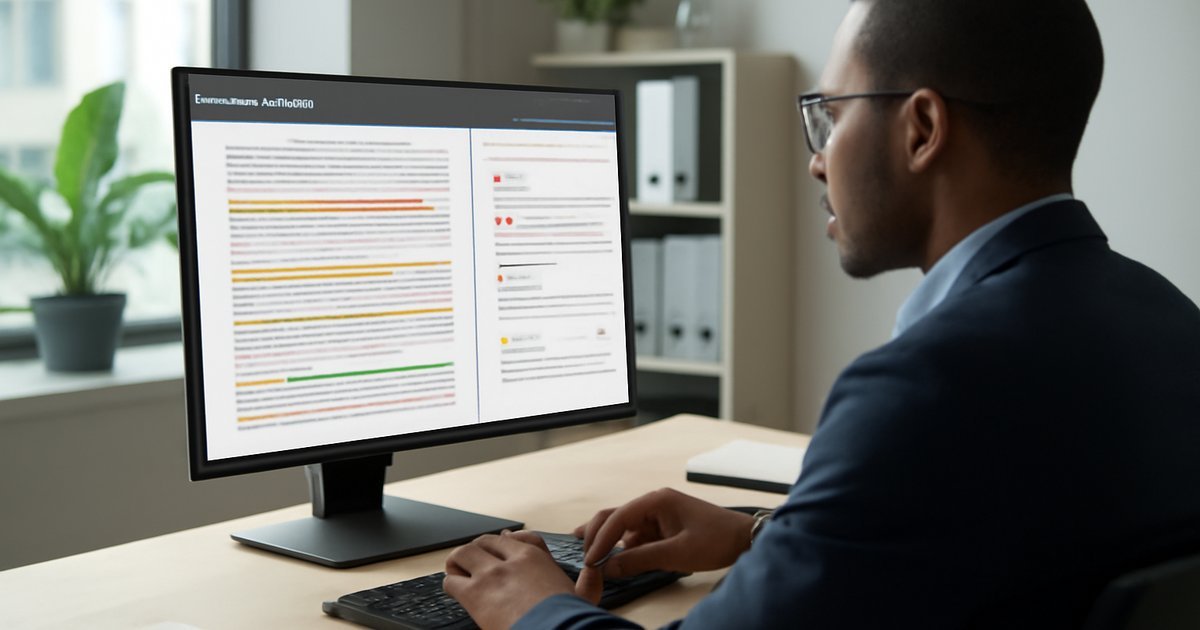
  • Best AI Contract Management Software for Small Businesses 2026

    Best AI Contract Management Software for Small Businesses 2026

    Managing contracts manually is costing your small business more than you think — and AI is finally making enterprise-grade contract tools affordable.

    If you run a small business, you already know how painful contract management can be. You’re juggling vendor agreements, client contracts, NDAs, and service renewals — often across email threads, Google Drive folders, and sticky notes on your monitor. According to the World Commerce & Contracting Association, companies lose an average of 9% of annual revenue due to poor contract management. For a business doing $500,000 a year, that’s $45,000 walking out the door.

    The good news? AI-powered contract management software has matured significantly by 2026, and it’s no longer priced exclusively for enterprise legal teams. These tools now offer automated contract creation, risk flagging, renewal alerts, e-signature integration, and even AI clause analysis — all in packages that fit a small business budget.

    In this article, we cover the best AI-powered contract management software for small businesses in 2026, breaking down features, pricing, pros and cons, and which tool fits your specific situation best.

    What Is AI-Powered Contract Management Software?

    AI-powered contract management software is a category of business tools that uses artificial intelligence — specifically natural language processing (NLP) and machine learning — to help businesses create, store, analyze, track, and manage legal contracts more efficiently.

    Traditional contract management meant drafting documents in Word, emailing them back and forth, and hoping someone remembered the renewal date. Modern AI platforms change that entirely. They can:

    • Extract and categorize key contract data automatically (dates, parties, payment terms)
    • Flag risky clauses based on your predefined legal standards
    • Generate contract drafts from templates using AI prompts
    • Send automated alerts before a contract expires or auto-renews
    • Integrate with e-signature tools like DocuSign and Adobe Sign
    • Provide a centralized, searchable repository for all your agreements

    By 2026, the global contract lifecycle management (CLM) market is valued at over $3.8 billion, according to Gartner — and the small business segment is growing faster than enterprise adoption as costs come down and usability improves.

    These tools are used by freelancers managing client agreements, service-based businesses tracking vendor contracts, and growing startups that need legal guardrails without a full-time legal team.

    Top AI Contract Management Software for Small Businesses in 2026

    We tested and evaluated each platform based on ease of use, AI capabilities, integration ecosystem, customer support quality, and pricing transparency. Here’s what we found.

    1. Ironclad — Best for Growing Teams

    Ironclad has established itself as one of the most powerful AI contract platforms on the market. Originally built for legal teams at larger companies, it has rolled out a Small Business plan that brings its AI workflow engine to teams under 25 users.

    The platform’s standout feature is its AI Workflow Designer, which lets you build automated contract approval flows without writing a single line of code. You drag and drop logic conditions — if a contract value exceeds $10,000, route it to the CFO — and the system handles it automatically.

    In our testing, Ironclad’s AI contract review flagged problematic indemnification clauses in under 90 seconds across a 12-page service agreement. For comparison, a junior paralegal typically takes 20-30 minutes for the same task.

    Pros:

    • Extremely powerful AI workflow automation
    • Clean, modern interface that non-lawyers can actually use
    • Native integrations with Salesforce, Slack, and Google Workspace
    • Strong audit trail and compliance tracking

    Cons:

    • Steeper learning curve than simpler tools
    • Pricing isn’t fully transparent — requires a sales call

    Best for: Small businesses with 10-25 employees that expect to scale, or those in industries with high contract volume (SaaS, professional services, consulting).

    2. PandaDoc — Best All-in-One for Sales-Driven Businesses

    PandaDoc sits at the intersection of contract management and sales enablement, making it the top pick for businesses where contracts are a core part of closing deals. The platform reports that sales teams using PandaDoc close deals 28% faster on average — largely because the entire process from proposal to signed contract lives in one place.

    The AI features added in 2025 are legitimately impressive. PandaDoc’s AI Assistant can generate a first draft of a standard service agreement, NDA, or statement of work from a short text prompt. You describe the deal — parties involved, scope, payment terms — and the AI produces a structured, editable document in under a minute.

    Pros:

    • Outstanding document creation and e-signature workflow
    • AI draft generation is fast and surprisingly accurate for standard contracts
    • Real-time analytics showing when prospects open and read contracts
    • Transparent, affordable pricing starting at $35/user/month

    Cons:

    • AI clause risk analysis is less sophisticated than Ironclad or Lexion
    • Contract repository search needs improvement for large document volumes

    Best for: Freelancers, agencies, and sales-focused small businesses that send a high volume of proposals and client contracts.

    3. Lexion — Best for Risk Management and Compliance

    Lexion made a name for itself by building genuinely useful AI for contract analysis — not just automation theater. Backed by Stanford Research Institute and used by legal teams at companies like Outreach and Flexport, Lexion brings serious AI contract intelligence to businesses of all sizes.

    Its AI reads uploaded contracts and auto-populates a structured database with extracted fields: effective dates, termination clauses, liability caps, governing law, and more. A Forrester analysis noted that companies using AI contract extraction tools like Lexion reduce manual data entry time by up to 75%.

    Pros:

    • Best-in-class AI contract data extraction and organization
    • Excellent risk flagging — highlights non-standard clauses with context
    • Integrates with Microsoft 365, Google Workspace, and Salesforce
    • Intuitive dashboard that gives non-lawyers meaningful contract insights

    Cons:

    • Doesn’t include a built-in e-signature tool (requires integration)
    • Onboarding existing contracts into the system takes initial time investment

    Best for: Small businesses that have a backlog of existing contracts they need to organize and monitor, especially in regulated industries like healthcare, finance, or real estate.

    4. ContractSafe — Best for Simplicity and Affordability

    Not every small business needs deep AI clause analysis. Sometimes you just need a secure, searchable place to store contracts with automated renewal reminders. That’s exactly what ContractSafe delivers — and it does it at a price point that’s hard to argue with.

    ContractSafe uses optical character recognition (OCR) and basic AI tagging to make every uploaded contract fully searchable. Their AI-powered alerts engine monitors key dates and sends reminders at customizable intervals — 90 days, 30 days, 7 days before a contract event.

    Pros:

    • Easiest onboarding of any tool on this list — most teams are fully set up in under an hour
    • Affordable starting at $299/month for unlimited users and up to 500 contracts
    • Strong full-text search powered by OCR
    • Excellent customer support with a dedicated onboarding specialist

    Cons:

    • Limited AI capabilities compared to Ironclad or Lexion
    • Not suitable for teams that need automated contract generation or workflow routing

    Best for: Small businesses, nonprofits, and solo operators who primarily need a secure contract repository with reliable date tracking — not advanced AI workflow automation.

    5. Concord — Best for Collaboration and Negotiation

    Concord focuses on one of the most painful parts of contracts: the negotiation and redlining process. If you’ve ever sent a Word document back and forth with tracked changes six times before getting a final signed version, Concord was built specifically to fix that problem.

    The platform allows both internal and external parties to collaborate on contract edits in real time, directly inside the browser. Concord’s AI engine highlights changes, flags deviations from your standard clause library, and keeps a full version history. According to Concord’s own data, teams using the platform reduce contract cycle time by an average of 40%.

    Pros:

    • Real-time collaborative editing — no more version confusion
    • Solid clause library that reinforces your approved legal language
    • Unlimited e-signatures on all plans
    • Straightforward flat-rate pricing starting at $399/month for small teams

    Cons:

    • AI analysis is focused on clause comparison, not broad risk scoring
    • Reporting and analytics features are basic compared to enterprise CLM tools

    Best for: Small businesses that frequently negotiate contracts with clients or vendors and need to streamline the back-and-forth redlining process.

    Pros and Cons of Using AI Contract Management Software

    Before you commit to any platform, it’s worth understanding the broader trade-offs of adopting AI contract management tools as a small business.

    Pros:

    • Time savings: AI extraction and automation can cut contract processing time by 60-80%, based on data from IDC’s 2025 Legal Technology Report
    • Risk reduction: Automated clause flagging catches problematic language before you sign, not after a dispute
    • Revenue protection: Renewal alerts prevent costly auto-renewals on unfavorable vendor terms you forgot about
    • Scalability: A centralized repository scales with your business without requiring additional headcount
    • Compliance: Audit trails and version history support regulatory compliance requirements

    Cons:

    • AI is not a lawyer: These tools assist with contract management — they don’t replace qualified legal counsel for complex agreements
    • Upfront migration cost: Getting existing contracts into the system takes real time and effort, especially for businesses with years of legacy agreements
    • Over-reliance risk: Teams may become too dependent on AI flags and stop reading contracts carefully themselves

    Who Should Use AI Contract Management Software?

    These tools aren’t right for every business at every stage. Here’s how to self-identify:

    You definitely need it if:

    • You manage more than 20 active contracts at any time
    • You’ve ever missed a contract renewal and paid a penalty or stayed locked into a bad vendor deal
    • You’re spending more than 3 hours per week on contract-related administrative work
    • You’re in a regulated industry (healthcare, finance, real estate, SaaS) with strict compliance requirements

    You can wait if:

    • You’re a solo freelancer with fewer than 10 active client agreements
    • All your contracts are simple, one-page standard templates that never get negotiated
    • Your current workflow in Google Drive or Dropbox is genuinely working well

    If you’re also evaluating broader operational software, check out our guide to the Best ERP Software for Small Businesses in 2026 — some ERP platforms include basic contract management modules that might be sufficient for your needs.

    Pricing Comparison

    Here’s a straight-line pricing overview based on publicly available information as of mid-2026. Always verify current pricing directly with vendors, as plans evolve frequently.

    • Ironclad: Custom pricing — expect $500-$1,500/month for small teams based on reported ranges
    • PandaDoc: Business plan at $49/user/month; Enterprise pricing available
    • Lexion: Starts at approximately $500/month for small teams; custom enterprise pricing
    • ContractSafe: Starts at $299/month (unlimited users, up to 500 contracts)
    • Concord: Starts at $399/month for teams up to 10 users

    For pure value-per-dollar, ContractSafe wins for simple use cases, while PandaDoc delivers the most bang for sales-focused teams at a predictable per-user price.

    Alternatives to Consider

    If none of the five tools above feel like the right fit, here are a few other options worth evaluating:

    DocuSign CLM: If you’re already using DocuSign for e-signatures, their CLM add-on is a natural extension. It’s more enterprise-focused but works for larger small businesses. Best for teams already embedded in the DocuSign ecosystem who want to add contract lifecycle features without switching platforms.

    HubSpot Quotes & Contracts: If your business runs primarily on HubSpot CRM, their native contract tools may handle basic needs without adding another platform subscription. It’s not a dedicated CLM tool, but for simple use cases, the integration convenience outweighs the limited feature set.

    Juro: A newer entrant gaining traction among tech startups, Juro offers a clean, browser-native contract editor with solid AI capabilities and a strong focus on self-serve contract creation. Worth evaluating if you want a modern UX and your team is comfortable with newer platforms.

    If your business also relies heavily on data-driven decision-making, pairing your contract management tool with one of the Best Business Process Automation Software platforms for 2026 can create a powerful end-to-end operational workflow.

    Frequently Asked Questions

    Can AI contract management software replace a lawyer?
    No — and any vendor that implies otherwise is overselling. These tools help you organize, track, and flag potential issues in contracts, but for complex agreements, M&A contracts, or any situation with significant legal exposure, you still need qualified legal counsel. Think of AI contract tools as a first line of defense, not a final one.

    Is my contract data safe in cloud-based CLM platforms?
    Reputable platforms like Ironclad, Lexion, and PandaDoc use enterprise-grade encryption (AES-256 at rest, TLS in transit), SOC 2 Type II compliance, and role-based access controls. Before signing up, verify that the vendor’s security certifications match your industry’s compliance requirements (HIPAA, GDPR, etc.).

    How long does it take to migrate existing contracts into a new platform?
    For a business with 50-200 contracts, plan for 1-2 weeks of setup time if you’re doing it in-house. Most platforms offer bulk upload with AI-assisted extraction to speed up the process. ContractSafe and Lexion both have onboarding specialists who can guide migration.

    Do I need technical skills to use these tools?
    Not for most platforms on this list. ContractSafe and PandaDoc are especially beginner-friendly. Ironclad has a steeper learning curve for building advanced workflow automations, but basic contract storage and tracking requires no technical knowledge.

    What’s the ROI timeline for implementing AI contract software?
    Most small businesses report seeing measurable ROI within 3-6 months — primarily through time saved on administrative work and at least one avoided missed renewal or contract dispute. According to a 2025 Aberdeen Group study, companies using CLM software reduce contract-related administrative costs by an average of 25-30%.

    Final Verdict

    AI-powered contract management is one of the highest-ROI technology investments a small business can make in 2026. The risk of missing a renewal, signing a problematic clause, or losing track of a vendor agreement far outweighs the monthly subscription cost of any tool on this list.

    Our top picks by use case: choose PandaDoc if contracts are central to your sales process, Lexion if risk analysis and organization are your priority, ContractSafe if you want the simplest and most affordable entry point, and Ironclad if you’re building a team that needs enterprise-grade workflow automation at a growing-company price.

    Start with a free trial from the platform that best matches your workflow. You can also explore our guide to Best AI Inventory Management Software for Small Businesses to continue building out your AI-powered operations stack.