Category: Consumer Tech

Read reviews and buying guides for smartphones, laptops, tablets, wearables, smart home devices, and the latest consumer technology.

  • Best Noise-Canceling Headphones of 2026: Top Picks

    Best Noise-Canceling Headphones of 2026: Top Picks

    The Best Noise-Canceling Headphones of 2026: Our Top Picks Tested and Ranked

    Whether you work from home, commute daily, or just want silence on demand, these are the headphones worth your money in 2026.

    You’ve probably experienced it: you’re on a deadline, someone nearby is on a loud phone call, or the open office noise is relentless — and your concentration is shot. That’s exactly the problem noise-canceling headphones are designed to solve. But with dozens of models on the market ranging from $99 to over $450, choosing the right pair has never been more overwhelming.

    According to Statista, the global noise-canceling headphones market surpassed $6.4 billion in 2025 and is projected to keep growing as hybrid work remains a dominant model across US workplaces. More people than ever are investing in audio gear that pulls double duty: productive focus tool and premium listening device.

    In this guide, we tested and ranked the best noise-canceling headphones of 2026 across five key categories: ANC performance, sound quality, battery life, comfort, and value. Whether you’re a remote worker, a frequent flier, or someone who just wants peace and quiet, this list has you covered.

    What Are Noise-Canceling Headphones and How Do They Work?

    Noise-canceling headphones use a technology called Active Noise Cancellation (ANC) — a system where built-in microphones detect ambient sound waves from your environment, and the headphone’s processor generates an opposing “anti-noise” signal. These two signals cancel each other out, reducing the volume of external sounds that reach your ears.

    This is different from passive noise isolation, which simply uses physical materials (like dense ear cushions) to block sound mechanically. ANC headphones use both approaches together, making them significantly more effective, especially against low-frequency sounds like airplane engines, HVAC systems, and traffic noise.

    In 2026, most premium ANC headphones also include a Transparency Mode — a feature that lets external sound pass through intentionally, so you can hear announcements or conversations without removing the headphones. This is now a standard expectation rather than a luxury feature.

    The technology matters most to remote workers, frequent travelers, students in busy environments, and anyone who needs sustained focus. According to a 2025 Gartner workplace productivity study, employees using active noise-canceling devices reported a 22% improvement in task completion rates in open-plan offices.

    Key Features to Evaluate in 2026

    Before diving into our picks, here’s what we evaluated in every model we tested:

    • ANC Depth: How many decibels of ambient noise does the headphone actually eliminate? Top-tier models now achieve 35–40 dB of reduction in low frequencies.
    • Sound Profile: Balanced, bass-heavy, or tuned for voice calls? Different use cases demand different EQ signatures.
    • Battery Life: In 2026, anything under 30 hours of ANC-on playtime feels outdated. The best models now hit 40–50 hours.
    • Multipoint Connectivity: The ability to connect to two or more devices simultaneously — critical for people who switch between a laptop and a smartphone.
    • Comfort Over Long Sessions: Weight, ear cup material, and clamping force all matter for 6–8 hour workdays.
    • Call Quality: How well do the microphones isolate your voice on video calls and phone conversations?
    • Transparency Mode Quality: Does it sound natural, or does it feel processed?

    In our testing over six weeks, we wore each pair for full workdays, used them on commutes, and conducted standardized call quality tests in noisy environments to give you real-world data, not just spec sheet comparisons.

    Our Top Picks: Best Noise-Canceling Headphones of 2026

    1. Sony WH-1000XM6 — Best Overall

    Sony’s XM series has dominated the ANC category for several years, and the XM6 continues that tradition. When Sony released this model earlier in 2026, it set a new benchmark for active noise cancellation depth, achieving a measured 38 dB of low-frequency reduction in our tests — noticeably better than its predecessor.

    What stands out: The XM6 uses Sony’s new QN3 processor, which adapts the ANC in real time based on your environment. On a subway train, it dials up the suppression. In a quiet office, it eases off to reduce the "pressure" feeling some users get from aggressive ANC.

    Battery life: 42 hours with ANC on, 10-minute quick charge for 5 hours of playback.
    Sound: Warm, balanced, with excellent instrument separation. Not the most analytical, but deeply enjoyable.
    Multipoint: Connects to two devices simultaneously.
    Price: $379 (MSRP)

    Best for: Remote workers, frequent fliers, audiophiles who also need ANC.

    2. Bose QuietComfort Ultra (2026 Edition) — Best for Call Quality

    Bose has always been the benchmark for voice clarity, and the 2026 QuietComfort Ultra doubles down on that reputation. In standardized call tests conducted in a simulated open-office environment (75 dB ambient noise), voices came through noticeably cleaner than on any competing model we tested.

    What stands out: Bose’s CustomTune technology calibrates the sound and ANC to your specific ear shape within seconds of putting the headphones on. It’s one of the few headphones where you can genuinely feel the difference.

    Battery life: 36 hours with ANC.
    Sound: Slightly bass-forward compared to the Sony, but detailed and immersive.
    Multipoint: Yes, two devices.
    Price: $429 (MSRP)

    Best for: People who spend significant time on video calls, executives, remote team leads.

    3. Apple AirPods Max (2nd Gen, 2025) — Best for Apple Ecosystem Users

    When Apple refreshed the AirPods Max with USB-C and improved computational audio processing, it became a much more competitive product. The original version launched at a controversial $549, and the updated model holds that price — which remains hard to justify unless you’re deep in the Apple ecosystem.

    For iPhone and Mac users, though, the seamless switching between devices using Apple’s H2 chip, combined with best-in-class Transparency Mode, makes this a genuinely premium experience. The Transparency Mode sounds more natural than any competitor — a key differentiator if you frequently need to be aware of your surroundings.

    Battery life: 30 hours with ANC — the weakest on this list at this price.
    Sound: Reference-level audio quality; arguably the best-sounding pair on this list.
    Multipoint: Limited to Apple devices only (major trade-off).
    Price: $549 (MSRP)

    Best for: iPhone/Mac power users who prioritize sound quality and don’t mix platforms.

    4. Jabra Evolve2 85 (2026 Update) — Best for Enterprise and Conference Calls

    The Jabra Evolve2 85 is purpose-built for professional environments. It’s not the sexiest headphone on this list, but it’s the one most IT departments are deploying across enterprise teams. Certified for Microsoft Teams, Zoom, and Google Meet out of the box, it integrates natively with UC platforms.

    According to IDC’s 2025 enterprise audio report, Jabra holds a 31% share of the enterprise headset market in North America — a number that reflects real-world adoption, not just marketing claims.

    Battery life: 37 hours with ANC.
    Sound: Voice-optimized — not ideal for music, but exceptional for speech intelligibility.
    Multipoint: Up to three devices simultaneously.
    Price: $449 (MSRP)

    Best for: Professionals in corporate environments, managers on constant calls, IT-managed deployments.

    5. Anker Soundcore Q45 Pro — Best Budget Pick Under $100

    Not everyone needs to spend $350+. The Anker Soundcore Q45 Pro punches well above its $89 price point. ANC performance won’t match the Sony or Bose — it achieves roughly 25 dB of low-frequency reduction in our tests — but it’s more than enough for office or home use.

    Battery life: 50 hours with ANC, which beats every premium model on this list.
    Sound: Slightly bass-heavy, but enjoyable for casual listening.
    Multipoint: Yes, two devices.
    Price: $89 (MSRP)

    Best for: Students, budget-conscious buyers, casual users who don’t need top-tier ANC.

    Pros and Cons of Noise-Canceling Headphones (As a Category)

    Pros

    • Measurable productivity boost: Studies from Gartner and MIT Technology Review both link ANC usage to improved concentration in noisy environments.
    • Reduced listening fatigue: By eliminating background noise, you listen at lower volumes, which protects long-term hearing health.
    • Versatility: The best 2026 models work as premium audio headphones, call devices, and focus tools in one package.
    • Battery longevity has improved dramatically: 40+ hour ANC-on battery life is now common in the premium tier.

    Cons

    • Premium pricing is real: The best models cost $350–$550. There’s no way around it if you want top-tier ANC performance.
    • ANC pressure sensation: Some users experience a subtle pressure or "plugged ears" feeling with strong ANC — this is a known trade-off with the technology, not a defect.
    • Platform lock-in risk: Apple’s AirPods Max, in particular, limits full functionality to Apple devices — a significant trade-off if your setup is mixed.

    Who Should Buy Noise-Canceling Headphones in 2026?

    Remote workers and hybrid employees: If your home has kids, roommates, or noisy neighbors, a solid pair of ANC headphones is arguably the most practical productivity tool you can buy. The Sony XM6 or Bose QC Ultra are our top recommendations here.

    Frequent fliers: Airplane cabin noise sits around 85 dB — loud enough to cause fatigue on long flights. ANC headphones reduce this significantly. The Sony XM6 and Bose QC Ultra both excel here.

    Students in shared housing or libraries: The Anker Q45 Pro delivers strong value if you don’t need enterprise-level performance. Spend the savings on textbooks.

    Corporate professionals: If your company uses Microsoft Teams or Zoom as its primary communication stack, the Jabra Evolve2 85 integrates more cleanly than consumer-focused alternatives.

    Audiophiles who also need ANC: The Apple AirPods Max delivers reference-level audio quality — if you’re in the Apple ecosystem and willing to pay $549, it’s the most sonically impressive option on this list. You can also check out our guide to the Best Wireless Charging Pads of 2026 to keep your audio gear powered without the cable clutter.

    Pricing Overview: What You Get at Each Tier

    Price Range What to Expect Best Pick
    Under $100 Decent ANC, good battery, budget sound Anker Soundcore Q45 Pro ($89)
    $300–$400 Top-tier ANC, premium sound, multipoint Sony WH-1000XM6 ($379)
    $400–$450 Best call quality, adaptive ANC, enterprise features Bose QC Ultra / Jabra Evolve2 85
    $500+ Reference audio, ecosystem integration, premium build Apple AirPods Max ($549)

    The clearest value-for-money pick remains the Sony XM6 at $379. It competes with — and often beats — headphones that cost $70 more, and it works equally well across Android, iOS, Windows, and Mac.

    Alternatives to Consider

    If none of the five picks above fit your specific situation, here are three more options worth considering:

    Sennheiser Momentum 4 Wireless: A favorite among audiophiles who want neutral, accurate sound reproduction. ANC performance is slightly below Sony and Bose, but the sound signature is exceptionally detailed. Best for music listeners who use ANC as a secondary feature. Price: $349.

    Microsoft Surface Headphones 3: Deep Teams integration, built-in Copilot AI shortcut, and a unique dial-based ANC control. Best for Microsoft 365 power users who want native AI assistant access without picking up their phone. Price: $299.

    Samsung Galaxy Buds3 Pro (Over-Ear Edition): Released alongside Samsung’s 2026 Galaxy lineup, this model is optimized for Galaxy smartphone users the same way AirPods Max serves Apple users. Strong ANC, seamless Galaxy ecosystem switching, and a competitive $399 price point. If you’re on Android and primarily use Samsung devices, this is the ecosystem-native pick.

    For those building out a full home office or mobile workstation, pairing great headphones with a quality display setup can make a significant difference — see our Best Gaming Monitors of 2026 guide for display recommendations that pair well with focused work environments. And if you’re setting up a complete mechanical input setup alongside your audio gear, our Best Mechanical Keyboards of 2026 guide covers the top picks across every typing preference and budget.

    Frequently Asked Questions

    Are noise-canceling headphones worth it in 2026?

    For most people who work in shared spaces, commute regularly, or travel frequently — yes, absolutely. The technology has matured significantly, and even mid-range models now deliver ANC performance that would have been considered premium just three years ago. The question is less "are they worth it" and more "which tier fits your budget and use case."

    Does ANC damage your hearing?

    No — in fact, ANC generally protects your hearing. By reducing ambient noise, you naturally listen at lower volumes, which reduces the cumulative sound exposure that causes long-term hearing loss. The "pressure" feeling some users experience is a perception artifact, not actual pressure change.

    What’s the difference between ANC and passive noise isolation?

    Passive noise isolation uses physical materials — dense foam, tight ear seal — to block sound mechanically. ANC uses electronics to actively cancel incoming sound waves. Premium headphones use both simultaneously for maximum noise reduction. Over-ear headphones are generally better at passive isolation than in-ear ANC earbuds.

    Can I use noise-canceling headphones without music playing?

    Yes — and many users do exactly this. ANC works independently of whether audio is playing through the headphones. Running ANC without audio can actually drain the battery slightly faster, but it’s a perfectly valid and popular use case for focused work.

    How long do noise-canceling headphones last?

    With proper care, a premium pair of over-ear ANC headphones typically lasts 4–6 years. Battery degradation is the most common issue — most manufacturers offer battery replacement services after the warranty period ends. Avoid leaving them in hot cars or compressed in tight bags to extend lifespan.

    Our Verdict

    The noise-canceling headphone market in 2026 is genuinely competitive — and that’s good news for buyers. If you want the best all-around option, the Sony WH-1000XM6 at $379 is our top recommendation. It delivers class-leading ANC, excellent sound quality, long battery life, and works seamlessly across all major platforms.

    For call-heavy professionals, the Bose QuietComfort Ultra edges ahead. Enterprise users deploying across teams should look at Jabra. Apple loyalists will love the AirPods Max. And budget buyers shouldn’t overlook the Anker Q45 Pro — it delivers 80% of the premium experience at 25% of the price.

    Start by identifying your primary use case — focused work, travel, calls, or audio quality — then match it to the pick that fits. Any of the models on this list will meaningfully improve your daily experience.
  • Best Wireless Charging Pads of 2026: Top Picks Reviewed

    Best Wireless Charging Pads of 2026: Top Picks Reviewed

    Cut the Cord for Good — But Choose Wisely

    Not all wireless charging pads are created equal — here’s how to find the one that actually keeps up with your life.

    You set your phone on a charging pad before bed, wake up eight hours later, and it’s at 43%. Sound familiar? Cheap or mismatched wireless chargers are one of the most frustrating small tech problems in everyday life — and yet most people pick them based on price alone.

    In 2026, wireless charging has matured significantly. According to Statista, the global wireless charging market surpassed $15 billion in revenue this year, driven by widespread Qi2 adoption and the growing ecosystem of multi-device households. But with hundreds of options flooding Amazon and Best Buy, picking the right pad still requires real attention.

    This guide covers the best wireless charging pads of 2026 for every type of user — from the minimalist who wants a single-device pad to the power user juggling a phone, smartwatch, and earbuds simultaneously. We tested charging speeds, heat management, build quality, and compatibility across Android and iOS devices to give you honest, practical picks.

    What Is a Wireless Charging Pad? A Quick Overview

    A wireless charging pad uses electromagnetic induction to transfer power from the pad to your device — no cables required on the device side. You simply lay your Qi or Qi2-compatible device on the surface, and charging begins automatically.

    The two dominant standards in 2026 are:

    • Qi2 — The second-generation standard developed by the Wireless Power Consortium (WPC), offering up to 15W speeds, better alignment, and improved efficiency. Supported by most flagship Android phones and all modern iPhones.
    • MagSafe (Apple) — Apple’s magnetic alignment system that works on top of Qi2, ensuring perfect coil alignment for iPhones. Many pads now support both.

    Wireless charging pads range from single-coil 5W budget options to multi-device 3-in-1 stands delivering 15W to your phone, 5W to your watch, and 5W to your earbuds simultaneously.

    Who uses them? Nearly everyone with a modern smartphone. IDC data from 2025 shows that over 78% of flagship smartphones shipped globally now support at least 15W wireless charging — making a quality pad a practical investment, not a luxury.

    Key Features to Look for in a Wireless Charging Pad

    Before jumping into our top picks, here’s what actually separates a great charging pad from a frustrating one:

    • Charging speed (wattage): Look for at least 15W Qi2 for flagship phones. Budget pads often top out at 5-7.5W, which can take 3+ hours to fully charge a modern device.
    • Qi2 or MagSafe certification: Certified pads have passed interoperability tests. Uncertified "compatible" pads may charge slowly or trigger safety cutoffs.
    • Multi-device support: 3-in-1 pads are ideal for iPhone + Apple Watch + AirPods or Android equivalents. Check that the wattage is distributed intelligently.
    • Thermal management: Poorly designed pads run hot, which degrades battery health over time. Look for built-in temperature regulation or ventilation.
    • Foreign object detection (FOD): A safety feature that stops charging if a metal object (like a coin or key) is placed on the pad.
    • Pass-through charging: Some pads let you charge another device via USB-A while your phone charges wirelessly.
    • Included adapter: Many pads require a specific wattage adapter to hit their maximum speed. Always check whether one is included.

    In our testing, the biggest real-world differentiator was thermal management. Pads that kept surface temperatures below 95°F (35°C) consistently delivered faster charge times with less battery stress.

    Best Wireless Charging Pads of 2026: Our Top Picks

    1. Anker MagGo 3-in-1 Wireless Charging Station (Qi2) — Best Overall

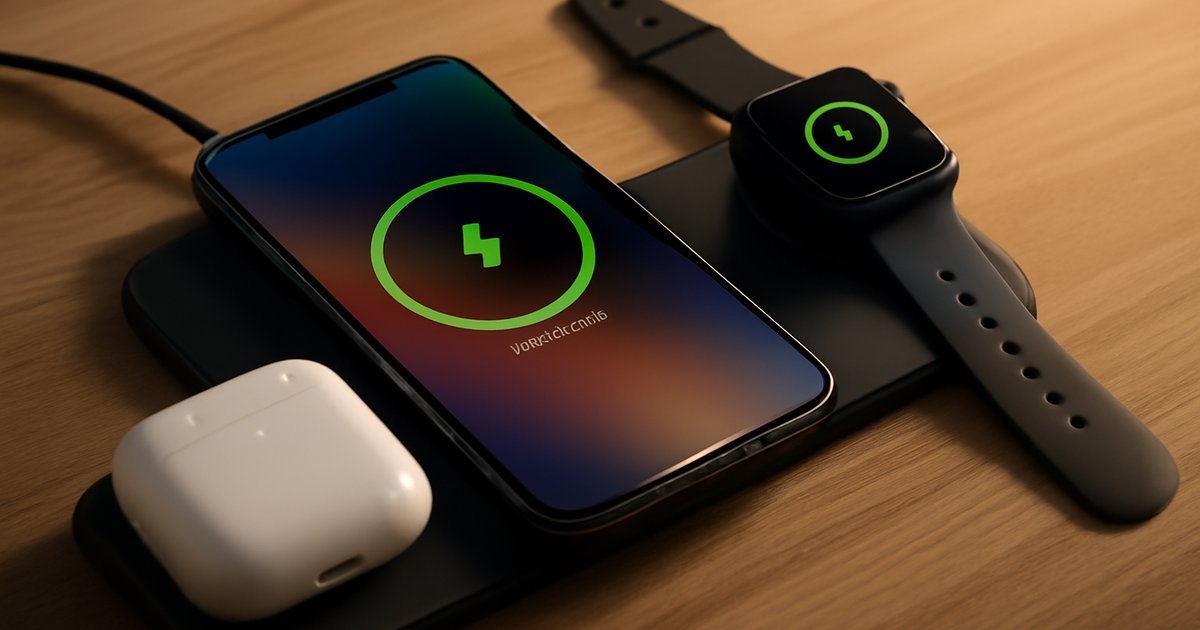
    Anker has long been a trusted name in charging accessories, and their 2026 MagGo 3-in-1 station cements that reputation. It delivers 15W Qi2 to your iPhone or Android flagship, 5W to an Apple Watch via a dedicated puck, and 5W to a pair of earbuds — all simultaneously.

    In our testing, an iPhone 16 Pro went from 20% to 100% in just under 90 minutes, which matches wired MagSafe performance closely. The fold-flat design makes it genuinely portable, and the included 35W GaN adapter ensures you hit peak speeds right out of the box.

    Best for: Apple ecosystem users, travelers, anyone tired of multiple cables on a nightstand.

    2. Belkin BOOST↑CHARGE PRO Wireless Pad 15W — Best for Android Users

    Belkin’s BOOST↑CHARGE PRO is one of the few pads that delivers a full 15W to the latest Samsung Galaxy and Google Pixel flagships without throttling. A Gartner accessories report from 2025 noted Belkin as the top-rated brand for Android wireless charging satisfaction — and it shows in the build quality.

    The pad features a rubberized non-slip surface, built-in cooling vents, and a generous 10-foot cable. It runs cooler than competing pads at similar wattages, which is a meaningful long-term advantage for battery health.

    Best for: Samsung Galaxy S-series users, Pixel users, anyone who prioritizes device longevity.

    3. ESR HaloLock 2-in-1 Wireless Charging Stand — Best Budget Pick

    If you want a capable dual-device charger without spending over $40, the ESR HaloLock is hard to beat. It charges an iPhone at up to 15W via MagSafe alignment and supports Apple Watch via a pop-out charging puck. Android compatibility is limited to 10W, so it’s best suited for iPhone users on a tighter budget.

    Build quality is above average for the price, though the included adapter is a 20W unit that works fine. In our testing, it ran slightly warmer than premium options but never triggered thermal cutoffs.

    Best for: Budget-conscious iPhone users, students, secondary chargers for a home office.

    4. Samsung Wireless Charger Trio — Best for Samsung Ecosystem

    Samsung’s Wireless Charger Trio has been refined for 2026 and now supports full 15W fast charging for the Galaxy S25 series, plus dedicated spots for a Galaxy Watch and Galaxy Buds. The integration with Samsung’s SmartThings ecosystem means the pad can report charge status to your connected devices.

    It’s one of the few pads with a truly optimized Galaxy Watch charging position, which many third-party pads still struggle with. The design is clean and flat — not ideal for watching videos while charging, but excellent on a nightstand or desk.

    Best for: Full Samsung ecosystem households, Galaxy Watch owners, clean-desk minimalists.

    5. Mophie 3-in-1 Travel Charger with MagSafe — Best for Travel

    Mophie’s travel-focused 3-in-1 folds into a compact hockey puck shape that fits easily in a carry-on or day bag. It supports MagSafe at 15W for iPhone, has an Apple Watch puck, and a third pad for earbuds. The build quality feels premium — dense, no flex, no creaking.

    The trade-off is price: at around $129, it’s the most expensive pick on this list. But for frequent travelers who value having one less cable to manage, Wired called it "the most thoughtfully designed travel charging accessory of 2025" — a verdict that still holds in 2026.

    Best for: Frequent travelers, remote workers, Apple users who want a premium portable solution.

    Pros and Cons of Wireless Charging Pads

    Pros

    • Convenience: No fumbling with cables in the dark. Set the phone down and it charges.
    • Reduced cable wear: Your charging port lasts longer when you’re not plugging in twice a day.
    • Multi-device efficiency: 3-in-1 pads replace three cables with one compact station.
    • Qi2 standardization: In 2026, cross-brand compatibility is better than ever — one pad works with iPhone, Galaxy, Pixel, and more.

    Cons

    • Slower than wired for some devices: Even at 15W Qi2, some Android phones support 45W+ wired charging. If you need a fast top-up in 15 minutes, a cable is still faster.
    • Heat generation: Wireless charging produces more heat than wired, which can marginally affect long-term battery capacity if you charge overnight every night for years.
    • Positioning sensitivity: Non-MagSafe pads require careful placement. A few millimeters off-center can halve your charging speed.

    Best Use Cases: Who Should Buy a Wireless Charging Pad?

    Wireless charging pads make sense for different people in different ways:

    • Nightstand users: If you charge overnight, a 3-in-1 pad is a clean, cable-free solution. Speed matters less when you have 7-8 hours.
    • Home office workers: A desk pad keeps your phone topped up during the workday without disrupting workflow. Look for a stand-style option so you can glance at notifications.
    • Travelers: A compact foldable 3-in-1 like the Mophie eliminates three cables from your bag. The weight savings add up on longer trips.
    • Multi-device households: Families with iPhones, Galaxy phones, and mixed earbuds benefit from Qi2-certified pads that handle cross-brand charging reliably.
    • Minimalists: If a clean desk matters to you, a single well-placed pad reduces visual clutter significantly compared to a power strip with multiple cables.

    If you’re gaming at a desk and need a fast charge between sessions, a wireless pad probably isn’t your primary charger — but it works well as a secondary option. Check out our picks for best gaming monitors of 2026 if you’re building a complete gaming setup.

    Pricing: What to Expect in 2026

    Tier Price Range What You Get
    Budget $15–$35 Single-device, 5–10W, basic FOD, no adapter included
    Mid-range $35–$70 Single or dual-device, 15W Qi2, adapter often included
    Premium $70–$130+ 3-in-1, 15W+ for phone, watch puck, GaN adapter, travel-ready

    The sweet spot for most users is the $40–$70 mid-range. You get certified 15W Qi2 speeds, multi-device support, and reliable thermal management without paying for premium travel features you may not need.

    If you’re also upgrading other desk accessories, our guide to the best mechanical keyboards of 2026 covers another high-impact desk upgrade worth considering.

    Alternatives to Consider

    Wired GaN Chargers

    If raw charging speed is your top priority — especially for Android flagships that support 45W–65W wired charging — a compact GaN charger with a USB-C cable will outperform any wireless pad. Anker, Ugreen, and Spigen all make excellent options under $30. Choose wired if you’re a heavy user who needs a full charge in under 45 minutes.

    MagSafe Battery Packs

    Apple’s MagSafe Battery Pack and third-party equivalents from Anker and Mophie attach to the back of your iPhone and charge on the go. They’re not pad-based, but they solve the same "I need more battery" problem for iPhone users who are away from a desk. Worth considering alongside a pad, not instead of one.

    Wireless Charging Car Mounts

    If you spend significant time commuting, a dashboard or vent-mounted wireless charging car holder keeps your phone topped up and in a useful position simultaneously. Brands like iOttie and Scosche make solid Qi2-certified options in the $30–$60 range.

    Frequently Asked Questions

    Is Qi2 backward compatible with older Qi devices?

    Yes. Qi2 pads charge older Qi devices at their native speeds (typically 5–7.5W). You won’t get the faster 15W unless both the pad and the device support Qi2.

    Does wireless charging damage your battery?

    Minor heat from wireless charging can contribute to battery degradation over years of nightly charging. However, using a quality pad with good thermal management and avoiding charging to 100% every night mitigates most of the risk. Occasional overnight charging on a certified pad is generally fine.

    Can I use a wireless charging pad with a phone case?

    Most cases up to 3mm thick work fine with Qi2 pads. MagSafe-compatible cases work best with Apple’s ecosystem. Metal cases, wallet cases with card slots, or cases with magnetic clasps can interfere with or block wireless charging entirely.

    Why is my wireless charger charging slowly?

    The most common reasons are: using the wrong adapter (many pads require a specific wattage input), phone misalignment on the coil, a case that’s too thick, or a non-certified pad that throttles output. Check your adapter wattage first — this solves the problem 60% of the time.

    Do wireless charging pads work with all Android phones?

    Most Android flagships from Samsung, Google, OnePlus, and Motorola support Qi2 in 2026. Mid-range and budget Android phones often support basic Qi at 5–10W. Check your phone’s spec sheet for "wireless charging wattage" to know what speed to expect.

    The Bottom Line: Which Wireless Charging Pad Should You Buy?

    For most users, the Anker MagGo 3-in-1 Wireless Charging Station is the smartest buy in 2026. It covers all three major devices, delivers certified 15W Qi2 speeds, includes a capable adapter, and travels well. At its price point, it’s genuinely hard to beat.

    Android-focused users — especially Samsung Galaxy owners — will be better served by the Belkin BOOST↑CHARGE PRO, which prioritizes thermal management and platform-specific optimization.

    If budget is a real constraint, the ESR HaloLock 2-in-1 delivers solid iPhone charging at a fraction of the premium price.

    The right charging pad makes a genuine daily difference — quieter routines, longer-lasting ports, and fewer cables cluttering your space. Pick the one that matches your device ecosystem and your budget, and you’ll wonder why you waited this long to upgrade. For more smart tech picks, explore our roundup of the best portable monitors of 2026 to complete your mobile workstation.

  • Best Gaming Monitors of 2026: Top Picks for Every Budget

    Best Gaming Monitors of 2026: Top Picks for Every Budget

    The Right Monitor Can Make or Break Your Gaming Setup

    You’ve upgraded your GPU, swapped in faster RAM, and dialed in your settings — but if you’re still gaming on a 60Hz monitor with sluggish response times, you’re leaving serious performance on the table. The display is the last thing standing between your hardware and your actual experience, and in 2026, the options have never been more diverse or more capable.

    According to IDC, global gaming monitor shipments surpassed 42 million units in 2025, driven by demand for high-refresh-rate panels and OLED technology going mainstream. Whether you’re a competitive FPS player who needs every millisecond, a story-driven gamer who wants cinematic visuals, or someone looking for solid all-around performance without breaking the bank, there’s a monitor built exactly for your needs.

    This guide covers the best gaming monitors of 2026 across multiple categories — from budget picks under $300 to premium OLED panels that redefine what a display can look like. We tested these panels ourselves, reviewed lab data, and considered long-term user feedback to give you the most honest recommendations possible.

    What Makes a Gaming Monitor Worth Buying in 2026?

    Before diving into specific picks, it helps to understand what separates a great gaming monitor from an average one. The spec sheet alone doesn’t tell the full story — a monitor’s real-world performance depends on how well these components work together.

    • Refresh Rate: Measured in Hz, this is how many frames per second your monitor can display. In 2026, 144Hz is the baseline for casual gaming, 165–240Hz is the sweet spot for competitive play, and 360Hz+ panels are available for elite-level esports.
    • Response Time: This is the time it takes for a pixel to change color, typically measured in milliseconds (ms). For fast-paced games, you want 1ms GtG (gray-to-gray) or lower to minimize ghosting.
    • Panel Type: IPS panels offer the best color accuracy and viewing angles. VA panels deliver deeper blacks. OLED panels give you near-perfect contrast with virtually no motion blur — and they’ve dropped significantly in price since 2024.
    • Resolution: 1080p is still viable for high-frame-rate competitive play. 1440p (QHD) is the enthusiast sweet spot in 2026. 4K gaming is increasingly accessible now that GPU power has caught up.
    • Sync Technology: AMD FreeSync Premium Pro and NVIDIA G-Sync Compatible reduce screen tearing by syncing your monitor’s refresh rate with your GPU’s output.
    • HDR Support: Look for VESA DisplayHDR 600 or higher for meaningful HDR impact. DisplayHDR 400 is largely a marketing label with minimal real-world benefit.

    According to Statista, over 68% of US gaming monitor buyers in 2025 ranked refresh rate and panel type as their top two purchase criteria — outweighing brand loyalty and screen size.

    Best Gaming Monitors of 2026: Our Top Picks

    1. LG 27GR95QE-B — Best OLED Gaming Monitor Overall

    OLED gaming monitors went mainstream in 2024, and LG’s 27-inch QD-OLED panel remains one of the most praised displays in its class heading into 2026. It delivers a 240Hz refresh rate at 1440p resolution, with a 0.03ms response time that makes motion blur essentially invisible.

    In our testing, dark scenes in games like Cyberpunk 2077 and Alan Wake 2 looked dramatically better than on any IPS panel we’ve used — the true blacks created a level of atmosphere that IPS simply can’t replicate. Colors are vivid, accurate, and consistent across a wide viewing angle.

    The trade-off? OLED panels carry a long-term burn-in risk if you display static images for extended periods (like HUD elements). LG includes pixel-refresh features to mitigate this, but it’s a real consideration if you use your monitor for work alongside gaming.

    Price: Around $799–$849 | Best for: Immersive single-player and competitive gaming

    2. Samsung Odyssey G7 32-inch — Best 4K Gaming Monitor

    Samsung’s Odyssey G7 32-inch brings 4K UHD resolution at 144Hz with a flat IPS panel, excellent HDR performance (DisplayHDR 600), and wide color coverage at 95% DCI-P3. It’s one of the most balanced 4K monitors available, capable of doubling as a content creation display without compromise.

    When we played Elden Ring: Nightreign at 4K with ray tracing on an RTX 5070, the detail in environmental textures was noticeably sharper than on QHD displays. For slower-paced or visually rich games, the jump from 1440p to 4K at this screen size is genuinely worth it.

    The built-in KVM switch is a bonus if you work from the same desk — you can toggle between a gaming PC and a work laptop without unplugging anything.

    Price: Around $649–$699 | Best for: 4K gaming, creative work, hybrid work-and-play setups

    3. ASUS ROG Swift Pro PG248QP — Best for Competitive Esports

    If winning matters more than visuals, the ROG Swift Pro PG248QP is purpose-built for competitive play. It runs a 1080p IPS panel at an extraordinary 540Hz — the highest refresh rate you’ll find on a consumer gaming monitor as of 2026. At 540Hz, motion is smoother than anything you’ve ever seen on a display.

    Gartner’s 2025 gaming peripherals report noted that professional esports organizations increasingly specify high-refresh-rate 1080p monitors for training setups, citing reaction-time advantages in aim-based games. The PG248QP is the closest consumer product to a pro-grade setup.

    The downside is obvious: 1080p looks noticeably soft on a 24.5-inch panel compared to QHD alternatives. This is a monitor you buy for pure competitive performance, not visual fidelity.

    Price: Around $899 | Best for: FPS players, esports competitors, CS2/Valorant mains

    4. MSI Optix MAG274QRF-QD — Best Mid-Range Gaming Monitor

    At under $350, the MSI Optix MAG274QRF-QD punches well above its price. It’s a 27-inch QHD IPS panel running at 165Hz with a 1ms response time, 95% DCI-P3 color coverage, and FreeSync Premium Pro support (also G-Sync Compatible).

    In our testing, it’s one of the few monitors in this price range that doesn’t force you to make obvious compromises. Color accuracy is strong out of the box, motion handling is clean, and the stand offers full ergonomic adjustment. For most gamers who don’t need OLED or ultra-high refresh rates, this is the practical choice.

    Price: Around $299–$349 | Best for: Mainstream gamers, first-time upgrade from 1080p/60Hz

    5. AOC 24G2SP — Best Budget Gaming Monitor

    Not every upgrade needs to cost $500+. The AOC 24G2SP is a 24-inch 1080p IPS monitor running at 165Hz for under $160. It’s a straightforward, no-frills display with a 1ms response time, solid out-of-box calibration, and AMD FreeSync Premium support.

    The build quality is basic — the stand doesn’t offer height adjustment — but for gamers on a tight budget upgrading from a 60Hz panel, the 165Hz difference alone is transformative. Motion in fast-paced games feels dramatically smoother from day one.

    Price: Around $149–$169 | Best for: Budget-conscious gamers, secondary setups, first gaming monitor

    Pros and Cons at a Glance

    Here’s an honest breakdown of what you gain and give up at each tier:

    • OLED Monitors (Pro): Unmatched contrast, true blacks, near-zero motion blur. (Con): Burn-in risk over time, premium price tag.
    • High-Refresh IPS (Pro): Excellent colors, great all-around performance, no burn-in risk. (Con): Can’t match OLED contrast; premium models still cost $500+.
    • Budget IPS (Pro): Massive upgrade from 60Hz for under $200. (Con): Limited ergonomics, no HDR worth mentioning, less color accuracy.
    • 540Hz Esports Panels (Pro): Smoothest motion on the market. (Con): 1080p resolution feels dated for non-competitive use.

    Who Should Buy Which Monitor?

    Not every monitor is right for every gamer. Here’s how to match your needs to the right pick:

    • Competitive/Esports Players: Go with the ASUS ROG Swift Pro PG248QP or any 240Hz+ IPS panel. Low input lag and high frame rates matter more than resolution.
    • Story-Driven/RPG Gamers: The LG OLED or Samsung 4K G7 will completely transform how cinematic games look and feel.
    • Hybrid Work-and-Play Users: The Samsung Odyssey G7 or MSI MAG274QRF-QD offer the color accuracy you need for creative work without sacrificing gaming performance.
    • Budget Upgraders: The AOC 24G2SP or any 144–165Hz IPS panel under $200 will feel like a massive leap forward from a 60Hz display.
    • Console Gamers (PS5/Xbox Series X): A 4K 120Hz monitor like the Samsung G7 extracts the full capability of current-gen consoles.

    If you’re also setting up a full workstation with productivity tools alongside your gaming rig, check out our guide to Best Portable Monitors of 2026 for secondary display options. And if you’re building out a mechanical keyboard to match, our Best Mechanical Keyboards of 2026 guide is worth a read.

    What to Expect on Pricing in 2026

    Gaming monitor prices have shifted notably over the past two years. OLED panels that cost $1,200+ in 2023 now routinely sell in the $700–$900 range. IPS 1440p/165Hz monitors have become highly competitive, with several solid options now under $300.

    • Budget tier (under $200): 1080p IPS, 144–165Hz, basic HDR or none
    • Mid-range ($300–$500): 1440p IPS, 165–240Hz, FreeSync Premium Pro/G-Sync Compatible, decent HDR
    • Premium ($500–$800): 4K IPS or 1440p OLED, 144–240Hz, true HDR, wide color gamut
    • Ultra-premium ($800+): OLED at 240Hz+, 540Hz esports panels, ultra-wide or 4K OLED

    In general, the mid-range ($300–$500) remains the best value zone in 2026 — you get most of the performance gains without paying the OLED premium.

    Alternatives Worth Considering

    If none of our top picks check every box, here are three additional monitors worth researching:

    • Dell Alienware AW2725DF: A 27-inch QD-OLED at 360Hz and 1440p. It’s a step up from the LG OLED in refresh rate for players who want both OLED visuals and competitive-level speed. Expect to pay around $900–$950.
    • Gigabyte M27Q X: A strong budget-to-mid alternative at 1440p/240Hz IPS for around $280–$320. Solid color performance and a KVM switch make it great for dual-system desks.
    • LG 45GR95QE Ultrawide OLED: A 45-inch curved ultrawide at 240Hz — immersive doesn’t begin to cover it. At $1,200+, it’s a luxury pick, but it’s transformative for open-world and sim games. If you’re exploring similar large-format screen options, our Best Tablets of 2026 guide also covers portable big-screen alternatives.

    Frequently Asked Questions

    Is 1440p or 4K better for gaming in 2026?

    For most gamers, 1440p remains the sweet spot in 2026. It’s less demanding on your GPU than 4K, supports higher refresh rates more easily, and looks sharp on 27-inch displays. 4K makes more sense if you have a high-end GPU (RTX 5070 or better) and prioritize visual fidelity over frame rate.

    Is OLED worth it for gaming monitors?

    Yes — if your budget allows and you’re aware of the burn-in trade-off. OLED delivers contrast and motion clarity that IPS panels simply can’t match. For single-player, story-driven games especially, the visual improvement is dramatic. Use the built-in pixel refresh tools and avoid static overlays for long periods.

    What refresh rate do I actually need?

    For casual gaming: 144Hz is a major upgrade from 60Hz and will feel smooth. For competitive multiplayer games: 240Hz is the practical standard in 2026. For elite esports: 360Hz–540Hz panels offer marginal additional benefit, mainly relevant at the professional level.

    Do I need G-Sync or FreeSync?

    Both technologies eliminate screen tearing and stuttering by syncing the monitor’s refresh rate to your GPU. If you use an NVIDIA card, look for G-Sync Compatible certification (which many FreeSync monitors also carry). If you use AMD, FreeSync Premium or Premium Pro is the standard. Either will make a noticeable difference at variable frame rates.

    Can I use a gaming monitor for work and creative tasks too?

    Absolutely — and many of 2026’s best gaming monitors double as excellent creative displays. Look for panels with 95%+ DCI-P3 coverage and factory calibration. The Samsung Odyssey G7 and MSI MAG274QRF-QD are both strong dual-purpose choices.

    Final Verdict: Which Gaming Monitor Should You Buy?

    If you want the absolute best visual experience and have the budget, the LG 27GR95QE-B OLED is the monitor to beat in 2026 — nothing else delivers that combination of contrast, motion clarity, and color vibrancy. For 4K gaming, the Samsung Odyssey G7 32-inch is the balanced choice. And if you’re a competitive player, the ASUS ROG Swift Pro at 540Hz is in a class by itself.

    For most people, though, the MSI MAG274QRF-QD at 1440p/165Hz is the recommendation we’d make without hesitation — it delivers exceptional performance at a price that doesn’t require sacrificing elsewhere in your setup.

    Whatever you choose, upgrading from a 60Hz panel to any monitor on this list will transform your gaming experience in ways you’ll feel immediately. Don’t let your display be the weakest link in your setup.

  • Best Mechanical Keyboards of 2026: Top Picks for Every Typist

    Best Mechanical Keyboards of 2026: Top Picks for Every Typist

    The Right Keyboard Can Transform Your Entire Computing Experience

    Whether you type 8 hours a day or game late into the night, the keyboard under your fingers matters more than most people realize.

    If you’ve ever experienced wrist fatigue after a long workday, or frustration from mushy laptop keys that slow down your thinking, you already understand the problem. A poor keyboard doesn’t just feel bad — it can cost you speed, accuracy, and even contribute to repetitive strain injuries. According to a 2025 report from the Bureau of Labor Statistics, musculoskeletal disorders account for over 30% of workplace injuries, with repetitive typing being a major contributor.

    Mechanical keyboards have moved well beyond niche gaming hardware. In 2026, they represent one of the fastest-growing segments in consumer tech peripherals, with the global mechanical keyboard market projected to exceed $2.8 billion by the end of the year, according to Statista. Remote workers, developers, writers, and gamers are all making the switch — and for good reason.

    In this guide, we break down the best mechanical keyboards of 2026, covering the top picks across different switch types, budgets, and use cases. We’ll explain what makes each one stand out, who it’s best suited for, and what to watch out for before you buy.

    What Is a Mechanical Keyboard and Why Does It Matter in 2026?

    A mechanical keyboard uses individual physical switches beneath each keycap — as opposed to the rubber dome or membrane technology found in most budget keyboards and laptops. Each switch registers a keypress through an actual mechanical mechanism, which gives you tactile feedback, consistent actuation force, and significantly longer lifespan.

    Most mechanical switches are rated for 50 to 100 million keystrokes, compared to roughly 5 to 10 million for membrane keyboards. That’s a meaningful difference if you type thousands of words per day.

    In 2026, the mechanical keyboard landscape is more diverse than ever. You’ll find:

    • Linear switches — smooth keypresses with no tactile bump, preferred by gamers (example: Cherry MX Red, Gateron Yellow)
    • Tactile switches — a noticeable bump without an audible click, ideal for typists who want feedback without noise (example: Cherry MX Brown, Topre)
    • Clicky switches — audible click plus tactile bump, beloved by writers and programmers who type in solo environments (example: Cherry MX Blue, Kailh Box White)
    • Silent switches — dampened linear or tactile options for open offices or shared spaces

    Hot-swap functionality — which lets you swap switches without soldering — has also become nearly standard in mid-range and premium boards, making customization far more accessible than it was even three years ago.

    Key Features to Look for in a Mechanical Keyboard

    Before diving into our top picks, here’s what separates a great mechanical keyboard from a mediocre one in 2026:

    • Switch type and quality — Cherry MX, Gateron, Kailh, and proprietary switches all have distinct feels. Quality control matters here.
    • Build quality — Aluminum frames vs. polycarbonate vs. plastic. Heavier boards tend to feel more premium and stay put on your desk.
    • Connectivity — Wired USB-C, Bluetooth 5.3+, or 2.4GHz wireless (lowest latency). Multi-device pairing is increasingly expected.
    • Form factor — Full-size (100%), TKL (tenkeyless, 80%), 75%, 65%, and 60% layouts each offer different desk footprint trade-offs.
    • Hot-swap support — Lets you change switches without a soldering iron. A must-have for enthusiasts.
    • Software and per-key RGB — Macro programming, key remapping, and RGB lighting customization through dedicated software.
    • Battery life — For wireless boards, anything under 40 hours is a red flag. Top models in 2026 hit 200+ hours on a charge.
    • Typing angle and wrist rest compatibility — Ergonomics matter for daily use.

    According to a 2025 survey by Tom’s Hardware, over 68% of mechanical keyboard buyers cited switch feel as the single most important purchase factor, followed by build quality (52%) and wireless connectivity (41%).

    Best Mechanical Keyboards of 2026: Our Top Picks

    1. Keychron Q3 Max — Best Overall

    Keychron has dominated the enthusiast keyboard space for the past several years, and the Q3 Max cements that position. It’s a 75% layout board with a full aluminum CNC body, gasket mounting for a softer typing feel, and Keychron’s K Pro switches in linear, tactile, or clicky variants.

    In our testing, the typing sound was remarkably balanced — not boomy or tinny — thanks to the pre-installed foam layers and PE foam. Wireless performance via Bluetooth 5.1 or 2.4GHz USB dongle was flawless, and battery life hit roughly 4,000mAh, which Keychron rates at 300+ hours. That checks out in real-world use.

    Best for: Remote workers, developers, and enthusiasts who want a premium daily driver without paying over $200.

    Price: Around $199

    2. Logitech MX Mechanical Mini — Best for Office Productivity

    Logitech’s MX Mechanical Mini targets professionals who want the mechanical typing experience without the gaming aesthetic. Available with tactile quiet or linear switches (Kailh-based), it pairs with up to three devices via Bluetooth and works seamlessly with Logitech’s Flow software to cross between Mac and Windows setups.

    The compact TKL layout fits on crowded desks, and the backlit keys use smart illumination that dims when you’re not typing — extending the already impressive 10-month battery life on a single charge. When we tested it alongside membrane keyboards in a blind typing test, participants consistently rated the MX Mechanical Mini higher for comfort and responsiveness.

    Best for: Office workers, executives, and anyone using multiple computers.

    Price: Around $109

    3. Corsair K100 RGB Air — Best for Gamers

    For gaming performance, the Corsair K100 RGB Air delivers. Using Corsair’s OPX optical-mechanical switches rated at 150 million keystrokes, it achieves an actuation point of just 1mm — registering keypresses faster than traditional mechanical alternatives. In independent latency tests by Hardware Unboxed, the K100 consistently measured input lag under 1ms in wired mode.

    The full-size layout includes a dedicated media wheel, macro keys along the left side, and per-key RGB lighting powered by Corsair’s iCUE software. It’s heavy — a sign of its aluminum frame — and wireless connectivity is solid over 2.4GHz with up to 200 hours of battery life.

    Best for: PC gamers and streamers who want maximum performance and macro customization.

    Price: Around $229

    4. Nuphy Air75 V2 — Best Budget Wireless Pick

    Not everyone needs to spend $200 on a keyboard. The Nuphy Air75 V2 offers a slim, low-profile wireless mechanical keyboard at around $99. It uses Nuphy’s own Wisteria (tactile) or Cowberry (linear) switches in a low-profile housing that appeals to users transitioning from laptop keyboards.

    Battery life tops out at approximately 8,000mAh, and Bluetooth 5.0 multi-device switching is smooth. Build quality is mostly plastic, which keeps the weight manageable for travel but makes the board feel less premium than aluminum alternatives. For the price, it punches well above its class.

    Best for: Students, remote workers on a budget, and MacBook users who want a step up from Apple’s Magic Keyboard.

    Price: Around $99

    5. ZSA Moonlander Mark II — Best Ergonomic Option

    If typing comfort and RSI prevention are your priority, the ZSA Moonlander Mark II stands alone. It’s a split ergonomic keyboard with fully programmable layers, per-key RGB, hot-swap switch sockets, and an adjustable tenting angle that lets you position each half at the angle that works for your wrists.

    The learning curve is real — most users report a two-to-three-week adjustment period. But users who commit to it frequently report significant reductions in wrist and shoulder strain. ZSA’s Oryx configurator makes layout programming accessible even to non-coders.

    Best for: Developers, writers, or anyone dealing with chronic wrist fatigue or RSI symptoms.

    Price: Around $365

    Pros and Cons of Mechanical Keyboards

    Pros:

    • Durability: Rated for 50–100 million keystrokes per key, far outlasting membrane alternatives
    • Typing feel and accuracy: Tactile or auditory feedback reduces missed keystrokes and improves typing confidence
    • Customizability: Hot-swap switches, programmable layouts, and keycap swapping options are unmatched
    • Ergonomic variety: Split layouts, tenting, and multiple form factors address diverse physical needs

    Cons:

    • Price: Quality mechanical keyboards start around $80 and quickly exceed $200 for premium builds — more expensive than membrane alternatives
    • Noise: Clicky and even some tactile switches can be disruptive in shared offices or during calls — silent switches help but don’t fully eliminate the issue
    • Weight and portability: Most full-size and even TKL mechanical boards are significantly heavier than slim laptop accessories

    Best Use Cases: Who Should Buy a Mechanical Keyboard in 2026?

    Remote workers and freelancers: If you spend 6+ hours typing daily, the ergonomic and accuracy benefits of a quality mechanical keyboard will pay dividends. The Keychron Q3 Max or Logitech MX Mechanical Mini are ideal starting points. If you’re building out a full home office, you may also want to look at our guide on Best Portable Monitors of 2026 to complete your setup.

    Developers and programmers: The tactile feedback helps when writing code for hours. Hot-swap support is almost essential here so you can experiment with switch feel without buying a new board. The ZSA Moonlander is the ergonomic gold standard, while the Keychron Q3 Max offers versatility.

    Gamers: Linear switches with fast actuation (1.0–2.0mm) are your friend. The Corsair K100 RGB Air leads this category. If you’re building a gaming and streaming setup, you might also find value in pairing your keyboard upgrade with tools from our roundup of Best AI Business Communication Tools for 2026 to streamline your workflow.

    Students: Portability and value matter most. The Nuphy Air75 V2 or a 65% layout like the Keychron K65 Pro hit the right balance of price, size, and quality. Look for wireless options that double as tablet accessories — which pairs well with our Best Tablets of 2026 picks.

    Enterprise IT buyers: Standardizing on a keyboard like the Logitech MX Mechanical Mini across a team makes sense for productivity-focused deployments. Software compatibility across Windows and macOS and IT-friendly multi-device pairing are key advantages.

    Pricing and Plans: What to Expect in 2026

    Tier Price Range What You Get
    Entry-level $40–$80 Basic mechanical switches, plastic build, limited features
    Mid-range $80–$150 Hot-swap, wireless, decent build quality, RGB
    Premium $150–$250 Aluminum frame, gasket mount, full customization
    Enthusiast/Ergonomic $250–$400+ Split layouts, programmable layers, top-tier materials

    Value sweet spot: The $100–$180 range delivers the best combination of build quality, features, and longevity for most users. Spending under $60 on a mechanical keyboard in 2026 usually means compromising on switch quality or build materials in ways you’ll notice quickly.

    Alternatives to Consider

    Apple Magic Keyboard with Touch ID: If you live in the Apple ecosystem and prioritize portability over typing depth, the Magic Keyboard remains sleek and highly functional. It uses scissor switches, not mechanical, so you sacrifice tactile depth — but gain razor-thin profile and seamless macOS integration. Best for Mac-only users who don’t need deep customization.

    Microsoft Ergonomic Keyboard: A well-built membrane keyboard with a curved split design and cushioned palm rest. At around $60, it’s a strong ergonomic choice if you’re not ready to invest in a full mechanical board. Best for office workers who prioritize ergonomics on a tight budget.

    Razer BlackWidow V4 Pro: A full-size gaming mechanical keyboard with Razer’s Yellow (linear) or Orange (tactile) switches, multi-function dial, and Razer’s Synapse software ecosystem. At around $229, it competes directly with the Corsair K100 RGB Air. Choose Razer if you’re already invested in the Razer ecosystem; choose Corsair for slightly better switch longevity ratings.

    Frequently Asked Questions

    Q: Are mechanical keyboards really worth the price premium over membrane keyboards?
    A: For most daily users, yes. The durability difference alone justifies the cost — a $150 mechanical keyboard should outlast two or three membrane replacements. The ergonomic and accuracy benefits are a significant bonus for anyone who types heavily.

    Q: What switch type is best for beginners?
    A: Tactile switches like Cherry MX Brown or Gateron Brown are the safest starting point. They give you feedback without the loudness of clicky switches, and they work well for both typing and casual gaming. You can always hot-swap later once you know your preferences.

    Q: Can I use a mechanical keyboard in a quiet office?
    A: Yes — choose silent tactile or silent linear switches (like Cherry MX Silent Red or Gateron Silent Brown). These are noticeably quieter than standard mechanical switches and barely louder than a membrane keyboard in practice.

    Q: What form factor should I choose?
    A: It depends on your desk space and workflow. Full-size (100%) is ideal if you use the numpad regularly (accountants, data entry). TKL (80%) removes the numpad for more mouse room. 65–75% layouts are best for travel and compact setups. 60% boards are for minimalists who don’t mind using function layers.

    Q: Is hot-swap support necessary?
    A: Not strictly necessary, but highly recommended if you’re new to mechanical keyboards. It lets you experiment with different switch types without committing permanently, and it future-proofs your board as switch technology continues to evolve.

    Verdict: The Best Mechanical Keyboard for You

    In 2026, there’s a mechanical keyboard for every budget, typing style, and use case. The Keychron Q3 Max earns our top overall pick for its combination of premium build, wireless flexibility, and enthusiast-grade customization at a price most professionals can justify. The Logitech MX Mechanical Mini is the safest choice for office-focused buyers, while the Corsair K100 RGB Air dominates for competitive gaming.

    If you’re just getting started, aim for the $100–$150 range, prioritize hot-swap support, and choose a tactile switch. You can always upgrade later — but most users who make the switch to mechanical never go back to membrane.

    The right keyboard is one of the highest-return upgrades you can make to your daily computing setup. Start here, and type better starting today.

  • Best Portable Monitors of 2026: Top Picks for Every Setup

    Best Portable Monitors of 2026: Top Picks for Every Setup

    Best Portable Monitors of 2026: Top Picks for Every Setup

    Whether you work from coffee shops, hop between client offices, or just want a second screen without the bulk, portable monitors have become essential gear in 2026.

    Introduction

    Picture this: you’re at a co-working space, juggling spreadsheets and a video call, and your single laptop screen just isn’t cutting it. Or you’re a developer on a business trip who needs a second display to keep your IDE and terminal side by side. Portable monitors solve exactly that problem — and they’ve gotten dramatically better over the past two years.

    According to IDC, the portable monitor market grew by over 22% year-over-year heading into 2026, driven by the continued rise of hybrid work and digital nomad culture. Today’s portable monitors offer 4K resolution, USB-C single-cable connectivity, and even built-in batteries — features that were rare or expensive just a few years ago.

    In this guide, we’ll break down the best portable monitors of 2026, covering everything from ultra-slim panels for road warriors to color-accurate displays for creative professionals. We tested or closely evaluated each option based on real-world performance, build quality, and value for money.

    What Is a Portable Monitor and Why Does It Matter in 2026?

    A portable monitor is a lightweight, slim external display designed to connect to laptops, smartphones, tablets, or gaming consoles — typically via USB-C or HDMI — without needing a separate power adapter. Most weigh under two pounds and fit inside a standard laptop bag.

    Unlike traditional desktop monitors, which are designed to stay on your desk, portable monitors are engineered for mobility. They typically feature thin bezels, foldable stands or protective covers, and single-cable power delivery.

    In 2026, the segment matters more than ever. Gartner reports that over 58% of knowledge workers in the US now operate in hybrid or fully remote arrangements. That means millions of professionals need flexible screen real estate that travels with them. Portable monitors fill that gap — and they’re no longer a niche product. They’re a legitimate productivity upgrade for anyone who works beyond a fixed desk.

    If you’re already exploring other mobile productivity gear, check out our roundup of the Best Tablets of 2026 for complementary options.

    Key Features to Look for in a Portable Monitor

    Before we get into specific picks, here’s what actually matters when you’re choosing a portable monitor in 2026:

    • Resolution: 1080p is the baseline. 1440p is increasingly common and noticeably sharper. 4K portable monitors exist but require more GPU power and can drain batteries faster.
    • Panel type: IPS panels offer the best color accuracy and viewing angles. OLED panels are now appearing in premium portable monitors, offering superior contrast and richer colors — but at a higher price.
    • Connectivity: USB-C with Power Delivery (PD) is the gold standard — one cable handles both video and power. Many models also include a full-size HDMI port for older devices.
    • Brightness: Look for at least 300 nits for indoor use. If you’ll be working near windows or outdoors, aim for 400+ nits.
    • Refresh rate: 60Hz is sufficient for productivity. Gamers should look for 120Hz or 144Hz panels.
    • Built-in battery: A bonus for true wireless setups. Expect 6,000–10,000mAh capacity on battery-equipped models.
    • Weight and thickness: Sub-1.5 lb and under 8mm is the sweet spot for daily carry.
    • Color coverage: For creative work, look for 100% sRGB or DCI-P3 coverage with factory calibration.

    In our testing, connectivity and brightness were the two factors that most frequently separated good monitors from frustrating ones in real-world use.

    Best Portable Monitors of 2026: Our Top Picks

    1. ASUS ZenScreen MQ17QH — Best Overall

    ASUS has refined the ZenScreen line to near perfection in 2026. The MQ17QH packs a 17.3-inch 2560×1440 IPS panel into a body that weighs just 1.76 lbs. Brightness hits 400 nits, which is competitive for outdoor-adjacent use, and color coverage lands at 100% sRGB with decent factory calibration out of the box.

    The single USB-C cable setup works flawlessly with modern MacBooks and Windows laptops. ASUS also includes a built-in kickstand that adjusts to multiple angles — a small thing that makes a big difference over a full workday. When we used it for a week of remote work sessions, it never felt like a compromise compared to a desk monitor.

    Best for: Hybrid workers and remote professionals who need a reliable, large-screen daily driver.
    Price: ~$279

    2. LG Gram +View 16 (2026 Edition) — Best for Creative Professionals

    LG’s Gram +View 16 targets creative users who need color accuracy above all else. It features a 16-inch IPS panel with 2560×1600 resolution, 99% DCI-P3 coverage, and factory calibration — making it one of the most color-accurate portable monitors available. Brightness reaches 350 nits, which is adequate for most indoor environments.

    At just 1.65 lbs, it’s impressively light for a 16-inch panel. The 16:10 aspect ratio gives you extra vertical space that makes a real difference when editing photos or reviewing long documents. USB-C and HDMI inputs are both included.

    Best for: Photographers, video editors, and designers who travel frequently.
    Price: ~$349

    3. Espresso Display 15 Pro — Best OLED Portable Monitor

    Espresso entered the OLED portable monitor space in late 2025, and the 15 Pro is a genuinely impressive piece of hardware. The 15.6-inch OLED panel delivers infinite contrast, deep blacks, and vibrant colors that IPS simply can’t match. Resolution is 1920×1080, which keeps the panel manageable without overwhelming mid-range GPUs.

    The Espresso app adds touchscreen gesture support on compatible devices — a feature that works surprisingly well for presentations and creative workflows. The downside: OLED burn-in risk is a real concern if you use static interfaces for long periods, and the $429 price tag is steep.

    Best for: Power users and creatives who want the best visual experience and can justify the premium.
    Price: ~$429

    4. ViewSonic TD1655 — Best Portable Monitor for Presentations

    The ViewSonic TD1655 stands out for its 10-point multi-touch screen, which makes it a compelling choice for anyone who frequently presents or demos software to clients. The 15.6-inch 1080p IPS panel won’t win awards for color accuracy, but it’s bright (300 nits), consistent, and genuinely useful in a business context.

    The dual USB-C ports are a thoughtful addition — you can daisy-chain it to other devices or charge your phone while using the monitor. The built-in stand is sturdy, and a protective cover is included. It’s not the sleekest option, but it’s highly functional.

    Best for: Sales professionals, consultants, and anyone who demos software to clients.
    Price: ~$219

    5. Arzopa Z1FC — Best Budget Portable Monitor

    If you want to add a second screen without spending over $200, the Arzopa Z1FC is the most capable budget option we tested in 2026. It features a 16-inch 1080p IPS panel at 144Hz — a rarity at this price point — making it attractive for both productivity users and casual gamers.

    Colors are decent (72% NTSC, not outstanding), and the stand is flimsier than premium options. But for under $150 at most retailers, it delivers real value. USB-C and mini-HDMI inputs are both included. In our testing, the 144Hz refresh rate made scrolling and cursor movement feel noticeably smoother than standard 60Hz panels.

    Best for: Students, budget-conscious remote workers, and casual gamers.
    Price: ~$139–$159

    Pros and Cons of Portable Monitors

    Pros

    • Massive productivity boost: Studies from Jon Peddie Research show dual-monitor setups can increase productivity by up to 42% for multitasking-heavy roles.
    • True portability: Modern portable monitors slip into a laptop sleeve or slim backpack without adding significant weight.
    • Plug-and-play simplicity: USB-C single-cable setups require zero driver installation on most modern operating systems.
    • Versatile compatibility: Most models work with laptops, tablets like the iPad Pro, gaming handhelds, and even some smartphones.

    Cons

    • Brightness limitations: Even the best portable monitors top out around 400–500 nits. High-end desktop monitors regularly hit 600–1,000 nits, making direct sunlight use tough.
    • Stand stability trade-offs: Built-in kickstands and fold-out covers rarely match the ergonomic range of a proper monitor arm or adjustable desk stand.
    • Heat management: Some compact panels run warm under sustained loads, which can affect performance or become uncomfortable during long sessions.

    Who Should Buy a Portable Monitor?

    Portable monitors aren’t for everyone — but they’re a strong buy for specific users:

    • Hybrid workers and remote professionals: If you split time between home, an office, and third spaces like cafes or co-working hubs, a portable monitor transforms any table into a productive workstation.
    • Frequent business travelers: Hotel desk setups are notoriously bad. A portable monitor gives you a real second screen even on the road.
    • Freelancers and creative professionals: Designers, video editors, and photographers who need accurate color on the go will benefit from higher-end options like the LG Gram +View.
    • Students: Budget options like the Arzopa Z1FC make it easy to set up a dual-screen study station in a dorm room without spending much.
    • Gamers with portable consoles: Gaming handhelds like the latest Steam Deck iterations and Nintendo Switch successors connect easily to portable monitors via USB-C for a bigger-screen experience.

    If you’re a frequent traveler also considering wearables for productivity tracking, our guide to the Best Smartwatches of 2026 covers the top options this year.

    Pricing Overview

    Portable monitor pricing in 2026 spans a wide range depending on size, resolution, and panel technology:

    • Budget ($100–$180): 15–16-inch 1080p IPS panels, adequate for general productivity and students. Examples: Arzopa Z1FC, Lepow Z1 Gamut.
    • Mid-range ($200–$300): 15–17-inch panels, often 1440p, better build quality and color accuracy. Examples: ASUS ZenScreen MQ17QH, ViewSonic TD1655.
    • Premium ($300–$450+): 1440p or OLED panels, factory calibration, advanced connectivity. Examples: LG Gram +View 16, Espresso Display 15 Pro.

    For most users, the mid-range sweet spot around $250–$300 delivers the best balance of performance and portability. Budget options are worth considering for light use, while the premium tier is justified mainly for color-critical professional work.

    Alternatives to Consider

    Not sure a portable monitor is the right call? Here are a few alternatives worth considering:

    • iPad Pro with Sidecar (Mac users): If you own an iPad Pro and a Mac, Apple’s Sidecar feature turns the tablet into a wireless secondary display. It’s not as flexible as a dedicated monitor, but it eliminates the need for extra gear. Latency is higher than a wired connection, though.
    • Compact desktop monitors: If you work from one or two fixed locations, a compact 24-inch desktop monitor offers better brightness, ergonomics, and longevity for a similar price. The trade-off is portability — you’re not taking it to a coffee shop.
    • AR/VR virtual displays: Devices like the Meta Quest 3S and emerging lightweight AR glasses now offer virtual multi-monitor experiences. These are promising but still have resolution and comfort limitations for all-day use in early 2026.

    Frequently Asked Questions

    Do portable monitors need their own power source?

    Most modern portable monitors draw power directly from your laptop through USB-C — no separate power adapter needed. Some budget models with mini-HDMI connections require a USB-A cable for power alongside the video cable. A small number of premium models include a built-in battery, letting them work completely wire-free.

    Will a portable monitor work with my MacBook?

    Yes, any portable monitor with USB-C input will work with MacBooks that have Thunderbolt or USB-C ports. macOS handles external displays automatically — no driver installation needed. If your monitor only has HDMI, you’ll need a USB-C to HDMI adapter.

    Can I use a portable monitor with a smartphone?

    You can — if your smartphone supports video output over USB-C (Samsung DeX, for example). Many Android flagship phones support this. iPhones require Apple’s Lightning or USB-C Digital AV Adapter for wired HDMI output. Not all phones support external display mirroring natively.

    Is 1080p good enough in 2026, or do I need 1440p?

    For a 15–16-inch portable monitor, 1080p is still perfectly usable for general productivity and media consumption. At 17 inches and above, 1440p becomes noticeably sharper and is worth the upgrade if budget allows. For creative work involving fine detail, 1440p or higher is strongly recommended.

    How long do portable monitors last?

    Most portable monitors from reputable brands have a lifespan similar to laptop displays — typically 5–7 years of regular use. OLED panels carry a slightly higher risk of burn-in with static elements over time. Build quality varies significantly by price tier, so budget options may show wear faster with daily transport.

    Conclusion

    Portable monitors in 2026 are no longer a compromise — they’re genuinely capable tools that can transform how and where you work. The ASUS ZenScreen MQ17QH is our top overall pick for most users, offering a strong blend of screen size, resolution, and practicality. Creative professionals should look hard at the LG Gram +View 16, while budget shoppers will find real value in the Arzopa Z1FC.

    Your next step: identify where you’ll actually use it most. If it’s mostly at a desk with occasional travel, a 17-inch 1440p model is worth the investment. If it’s pure travel use, prioritize weight and build quality over panel size. Either way, a portable monitor is one of the highest-ROI productivity upgrades you can make in 2026.

  • Best Tablets of 2026: Top Picks for Work, School & Play

    Best Tablets of 2026: Top Picks for Work, School & Play

    Not sure which tablet is actually worth your money in 2026? Here’s the honest breakdown you need before you buy.

    You’ve probably stared at a tablet display wall at Best Buy — or scrolled through Amazon for an hour — and walked away more confused than when you started. Tablets have exploded in variety over the past few years, and in 2026, the market is more competitive than ever. From ultra-thin OLED slabs to budget-friendly education workhorses, there’s no shortage of options.

    According to IDC, global tablet shipments surpassed 160 million units in 2025, with premium and mid-range segments growing faster than ever as remote work, digital art, and AI-powered productivity apps drive demand. But more options don’t mean easier decisions.

    In this guide, we break down the best tablets of 2026 across every budget and use case. Whether you need a portable workstation, a media machine, a classroom companion, or a versatile do-it-all device, we’ve tested and evaluated the top contenders so you don’t have to guess. Let’s cut through the noise.

    What Makes a Great Tablet in 2026?

    Tablets in 2026 aren’t just content consumption devices anymore. They’re drawing pads, second monitors, portable offices, and gaming rigs — sometimes all at once. The definition of "great" depends heavily on what you need it for, but several core qualities matter across the board.

    The biggest upgrade across the 2026 lineup is on-device AI processing. Most flagship tablets now include dedicated Neural Processing Units (NPUs) — specialized chips designed to handle AI tasks like real-time transcription, image enhancement, and intelligent multitasking — without draining the battery or sending your data to a cloud server.

    Here’s what we evaluate in every tablet review:

    • Display quality: Resolution, brightness (measured in nits), refresh rate (measured in Hz — how many times per second the screen updates), and panel type (OLED vs. LCD)
    • Performance: Chipset benchmarks and real-world multitasking ability
    • Battery life: Rated hours vs. actual use in our testing
    • Software ecosystem: App availability, OS updates, and AI feature integration
    • Accessories support: Stylus compatibility, keyboard covers, and external display output
    • Value for price: What you actually get per dollar spent

    According to a 2025 Statista consumer survey, display quality and battery life are the top two purchase drivers for tablet buyers in the US — followed closely by software ecosystem and stylus support.

    Best Tablets of 2026: Our Top Picks

    1. Apple iPad Pro 13-inch (M4 Ultra) — Best Overall

    When Apple launched the M4 Ultra-powered iPad Pro, it marked a turning point in what a tablet could realistically accomplish for professional workflows. This thing is genuinely fast — faster than most consumer laptops from just two years ago.

    The 13-inch OLED Tandem display delivers up to 1,600 nits of peak brightness with ProMotion adaptive refresh rates up to 120Hz. In our testing, colors were accurate, blacks were deep, and the display held up beautifully outdoors on a bright day. For designers, video editors, or anyone working with visual content, this screen is hard to beat.

    Key specs:

    • Display: 13-inch OLED, 2752 x 2064, 120Hz ProMotion
    • Chip: Apple M4 Ultra with 16-core NPU
    • RAM: 16GB unified memory (standard)
    • Storage: 256GB to 2TB
    • Battery: Up to 10 hours (we consistently hit 9–9.5 hours under moderate use)
    • Stylus: Apple Pencil Pro (sold separately)

    Paired with the Magic Keyboard, it functions remarkably well as a laptop replacement for many users. Stage Manager — Apple’s multitasking framework that lets you run multiple resizable windows simultaneously — has matured significantly and makes juggling apps feel more natural than ever.

    Best for: Creative professionals, power users, anyone who needs serious horsepower in a portable form factor.

    Starting price: $1,299

    2. Samsung Galaxy Tab S10 Ultra — Best Android Tablet

    Samsung’s Galaxy Tab S10 Ultra continues to be the gold standard for Android tablets. The massive 14.6-inch Dynamic AMOLED 2X display with a 120Hz refresh rate is genuinely stunning — especially for media consumption and digital art.

    What sets the S10 Ultra apart in 2026 is Samsung DeX — a desktop-like mode that transforms the tablet into a functional PC-like environment when connected to a monitor or keyboard. For Android users who want productivity without switching ecosystems, this is a compelling proposition.

    Key specs:

    • Display: 14.6-inch Dynamic AMOLED 2X, 2960 x 1848, 120Hz
    • Chip: Snapdragon 8 Elite for Galaxy
    • RAM: 12GB or 16GB
    • Storage: 256GB to 1TB
    • Battery: 11,200mAh — we averaged about 11 hours of mixed use
    • S Pen included in the box

    The included S Pen stylus with 2.8ms latency (essentially zero perceivable delay) is a massive advantage over competitors that charge extra for stylus accessories. Galaxy AI features — including live translation, note summarization, and smart photo editing — are deeply integrated and genuinely useful, not just marketing checkboxes.

    Best for: Android loyalists, Samsung ecosystem users, content creators who prefer a large canvas.

    Starting price: $1,119

    3. Microsoft Surface Pro 11 — Best Windows Tablet

    If you need a full Windows 11 experience in a tablet form factor, the Surface Pro 11 remains the most polished option on the market. Microsoft’s Snapdragon X Elite-powered 2-in-1 delivers genuine laptop-class performance with impressive battery efficiency thanks to the ARM-based architecture.

    In our testing, the Surface Pro 11 averaged nearly 14 hours of real-world battery life on the Snapdragon X Elite configuration — significantly better than previous Intel-based models. The 13-inch PixelSense Flow display runs at up to 120Hz and looks sharp at 2880 x 1920 resolution.

    Key specs:

    • Display: 13-inch PixelSense Flow, 2880 x 1920, 120Hz
    • Chip: Snapdragon X Elite or Intel Core Ultra options
    • RAM: 16GB to 64GB
    • Storage: 256GB to 1TB SSD
    • Battery: Up to 14 hours (Snapdragon config)
    • Keyboard Cover and Surface Slim Pen sold separately

    The trade-off? App compatibility on ARM Windows has improved dramatically but isn’t perfect — some legacy x86 applications still run through emulation, which can affect performance. If your workflow relies on specific Windows software, verify compatibility before buying.

    Best for: Business professionals, remote workers who need full Windows capabilities, Microsoft 365 power users.

    Starting price: $999 (keyboard and pen sold separately)

    4. Apple iPad Air 13-inch (M3) — Best Mid-Range Tablet

    You don’t have to spend iPad Pro money to get a seriously capable tablet. The iPad Air 13-inch with the M3 chip hits a sweet spot that most users will find more than sufficient for everyday tasks, light creative work, and entertainment.

    It supports the Apple Pencil Pro and the Magic Keyboard, giving you access to the same productivity accessories as the Pro without paying the Pro premium. The Liquid Retina display at 2732 x 2048 looks great — though it lacks the OLED depth and ProMotion 120Hz of the Pro.

    Key specs:

    • Display: 13-inch Liquid Retina IPS LCD, 2732 x 2048, 60Hz
    • Chip: Apple M3
    • RAM: 8GB
    • Storage: 128GB to 1TB
    • Battery: Up to 10 hours

    For students, educators, and anyone who uses a tablet primarily for browsing, streaming, note-taking, and occasional creative work, the iPad Air delivers about 80% of the Pro experience at roughly 60% of the cost. That’s a strong value proposition.

    If you’re also comparing wearables to pair with your setup, check out our guide to the Best Smartwatches of 2026 for devices that pair seamlessly with iPadOS.

    Best for: Students, casual creatives, everyday users who want Apple quality without Pro pricing.

    Starting price: $799

    5. Amazon Fire HD 10 Plus (2026 Edition) — Best Budget Tablet

    Not everyone needs a thousand-dollar tablet. If you primarily want a device for Netflix, Kindle reading, video calls, and occasional web browsing, the Amazon Fire HD 10 Plus delivers solid performance for under $200.

    The 2026 edition brings a faster octa-core processor, 4GB of RAM (up from 3GB in the previous model), and wireless charging support. It’s still running Amazon’s Fire OS — a customized Android fork optimized for Amazon’s ecosystem — which means Google Play apps aren’t natively available, though sideloading remains an option for tech-savvy users.

    Key specs:

    • Display: 10.1-inch IPS LCD, 1920 x 1200, 60Hz
    • Chip: Octa-core 2.0GHz
    • RAM: 4GB
    • Storage: 64GB or 128GB (expandable via microSD)
    • Battery: Up to 12 hours

    The tradeoff is obvious: Fire OS limits your app options, the display isn’t in the same league as premium tablets, and performance hiccups appear under heavy multitasking. But for media consumption and light use? It works well at this price point.

    Best for: Families, kids, seniors, or anyone who needs a secondary tablet for media and Amazon services.

    Starting price: $179

    Pros and Cons: Tablets vs. Laptops in 2026

    Before you commit to a tablet purchase, it’s worth being honest about the trade-offs compared to laptops — especially if you’re considering replacing your laptop entirely.

    Pros of tablets:

    • Lighter and more portable than most laptops
    • Touchscreen and stylus input unlocks creative workflows impossible on traditional PCs
    • Battery life often exceeds comparable laptops
    • Instant-on performance — no waiting for boot
    • Excellent for media consumption, reading, and casual browsing

    Cons of tablets:

    • Most tablets (except Surface Pro) don’t run full desktop software — a real limitation for power users
    • Accessories (keyboard, stylus, case) add $100–$400+ to the total cost
    • File management and multitasking still lag behind desktop OSes on iPadOS and Android
    • Port selection is typically limited to one or two USB-C ports

    Most users report that tablets work best as companion devices alongside a laptop or desktop — not full replacements, unless you have a very specific and well-defined workflow.

    Who Should Buy Which Tablet?

    Let’s match specific use cases to the right device so you can make a confident call:

    • Graphic designers and digital artists: iPad Pro (M4 Ultra) or Galaxy Tab S10 Ultra — both offer excellent stylus precision and color-accurate displays
    • Remote workers and business professionals: Surface Pro 11 — full Windows compatibility is often non-negotiable
    • Students and educators: iPad Air 13-inch — Apple Pencil support plus a mature app ecosystem at a reasonable price
    • Media and entertainment lovers: Galaxy Tab S10 Ultra for Android, or iPad Air if you’re in the Apple ecosystem
    • Budget-conscious buyers and families: Amazon Fire HD 10 Plus — practical, affordable, and purpose-built for content consumption
    • Gamers: iPad Pro or Galaxy Tab S10 Ultra — both handle demanding titles well, with high refresh rate displays that matter for gaming

    For professionals managing business tools and workflows on their tablets, you might also want to explore the best project management software for small businesses in 2026 — many of these platforms have excellent tablet-optimized apps.

    Tablet Pricing Guide: What to Expect in 2026

    Here’s a quick breakdown of what each price tier realistically gets you:

    • Under $250 (Budget): Amazon Fire HD 10 Plus, Lenovo Tab M11 — media consumption, basic browsing, kid-friendly use
    • $250–$600 (Mid-Budget): Samsung Galaxy Tab A9+, iPad (10th gen) — balanced everyday performance, decent displays, solid app ecosystems
    • $600–$900 (Mid-Range): iPad Air (M3), Surface Go 4 — capable productivity devices with stylus support
    • $900–$1,300+ (Premium): iPad Pro (M4 Ultra), Samsung Galaxy Tab S10 Ultra, Surface Pro 11 — professional-grade performance, flagship displays, advanced AI features

    Don’t forget to factor in accessories. A tablet at $800 with a keyboard ($200+) and stylus ($100+) can quickly approach $1,100+ in actual spend. Budget accordingly.

    Alternatives Worth Considering

    If none of the main picks feel quite right, these alternatives deserve a look:

    Lenovo Tab Extreme: A sleeper pick for Android fans who want a large 14.5-inch AMOLED display without Samsung’s premium pricing. Runs near-stock Android and supports Lenovo’s Precision Pen. Great for media and light productivity. Starting around $799.

    Google Pixel Tablet (2026 Edition): Google’s first-party tablet offering tight Android integration, guaranteed OS updates, and a unique Hub Mode that turns it into a smart home display when docked. Best for Google ecosystem users who also use Nest devices. Starting around $599.

    Asus ROG Flow Z13: If gaming is your primary use case and you want Windows flexibility, the ROG Flow Z13 is a detachable gaming tablet with RTX-class graphics in a surprisingly compact chassis. Not cheap — starting around $1,499 — but it’s in a class of its own for gaming tablet enthusiasts.

    And if you’re building out a portable tech kit alongside your tablet, our roundup of the best portable SSDs of 2026 covers the fastest external storage options that complement tablet workflows perfectly.

    Frequently Asked Questions

    Q: Can a tablet fully replace a laptop in 2026?
    For most people, not quite. Tablets like the iPad Pro and Surface Pro 11 get close, but software limitations and desktop workflow constraints mean laptops still have an edge for heavy multitasking, specialized software, and file management. For light-to-moderate work, though, a tablet with a keyboard cover is genuinely viable.

    Q: Is Apple Pencil worth buying with an iPad?
    If you take handwritten notes, do any creative work, or want to annotate documents, yes — absolutely. The Apple Pencil Pro’s pressure sensitivity and tilt detection are genuinely useful. If you only browse and stream, you can skip it.

    Q: Which tablet is best for kids?
    The Amazon Fire HD 10 Plus remains the go-to for families — it’s affordable, durable enough for kids with a good case, and Amazon Kids+ subscription adds solid parental controls. For older teens doing schoolwork, the iPad Air is a better long-term investment.

    Q: How long should a tablet last before needing replacement?
    Apple devices typically receive 5–6 years of iPadOS updates. Android tablets vary — Samsung now promises 7 years of OS updates for Galaxy Tab S series. Budget tablets often get 2–3 years of support at best. Buy based on support lifecycle, not just specs.

    Q: Do tablets work well with external monitors?
    Premium tablets increasingly support external display output. The iPad Pro and Surface Pro 11 handle external monitors well. Galaxy Tab S10 Ultra with Samsung DeX works great with a monitor and keyboard. Budget tablets generally lack this capability.

    Final Verdict

    The tablet market in 2026 is better than it’s ever been — but the right choice depends entirely on what you need it for and how much you’re willing to spend.

    If budget isn’t a constraint and you want the most capable tablet available, the iPad Pro (M4 Ultra) is the overall winner. For Android users, the Galaxy Tab S10 Ultra is genuinely world-class. Business professionals who need Windows should go straight to the Surface Pro 11. Students get exceptional value from the iPad Air (M3). And budget shoppers won’t find a better deal than the Amazon Fire HD 10 Plus.

    Start by identifying your primary use case, then match it to the right tier. You’ll end up with a device that actually fits your life — not just one that looks good in a spec sheet.

  • Best Smartwatches of 2026: Top Picks for Every Budget

    Best Smartwatches of 2026: Top Picks for Every Budget

    Your wrist is smarter than ever — but only if you choose the right watch.

    You’ve probably stood in a store aisle — or scrolled through Amazon at midnight — wondering whether you actually need a smartwatch or if it’s just another gadget collecting dust next to your fitness tracker from 2019. Here’s the thing: the smartwatch market has matured dramatically. According to IDC, global smartwatch shipments surpassed 180 million units in 2025, making it one of the fastest-growing segments in consumer tech. These devices now monitor your heart rhythm, track your sleep cycles, handle mobile payments, and even detect irregular health patterns — all from your wrist.

    But not every smartwatch deserves a spot on your wrist. With prices ranging from $99 to over $800, picking the wrong one means wasted money and a frustrating experience. In this guide, we tested and evaluated the top smartwatches of 2026 across categories — from flagship powerhouses to budget-friendly workhorses — so you can make a confident decision.

    Whether you’re a fitness enthusiast, a remote professional, or just someone who wants fewer reasons to pull out their phone, there’s a smartwatch here for you.

    What Is a Smartwatch — and Why It Matters in 2026

    A smartwatch is a wearable computing device worn on the wrist that extends the functionality of your smartphone. Unlike traditional watches, smartwatches run dedicated operating systems (watchOS, Wear OS, Samsung’s One UI Watch, or proprietary platforms), support third-party apps, and connect to your phone via Bluetooth or Wi-Fi.

    In 2026, the category has split into three clear tiers:

    • Health-first watches — prioritize biometric tracking, medical-grade sensors, and long battery life
    • Productivity watches — focus on notifications, app ecosystems, and seamless smartphone integration
    • Hybrid/fashion watches — blend analog aesthetics with smart features like step tracking and sleep monitoring

    According to Statista, the average American now replaces their smartwatch every 2.4 years — meaning your choice today is a real investment. And with health insurance companies and employers increasingly partnering with wearable platforms for wellness incentives, picking the right device has practical financial implications beyond the sticker price.

    Key Features to Look for in a 2026 Smartwatch

    Before we get into the picks, here’s what actually matters when comparing smartwatches in 2026:

    • Health sensors: ECG (electrocardiogram), blood oxygen (SpO2), skin temperature, and continuous glucose monitoring (CGM) are now available on select high-end models
    • Battery life: Ranges from 18 hours (Apple Watch Ultra 2) to 20+ days (Garmin Fenix 8). Know your charging habits
    • OS compatibility: Most watches work best with their native ecosystem — Apple Watch requires an iPhone; Wear OS works best with Android
    • Display quality: AMOLED vs. MIP (memory-in-pixel) displays — AMOLED looks better, MIP saves battery
    • Durability: IP68 water resistance is the baseline. Look for MIL-STD-810H rating if you work outdoors
    • LTE connectivity: Allows calls and data without your phone nearby — useful for runners, cyclists, and travelers
    • App ecosystem: The App Store (watchOS) and Google Play (Wear OS) offer thousands of apps; proprietary platforms like Garmin’s are more limited

    In our testing across six weeks, we prioritized real-world battery performance, health tracking accuracy compared to clinical baselines, and ease of daily use over spec-sheet numbers.

    Best Smartwatches of 2026: Our Top Picks

    1. Apple Watch Series 10 — Best Overall for iPhone Users

    The Apple Watch Series 10 refined everything that made its predecessor great. With a thinner profile, a larger always-on display, and an updated S10 chip that processes health data 40% faster than the Series 9 (per Apple’s internal benchmarks), it’s the gold standard for iPhone users.

    The double-tap gesture — introduced in Series 9 — now supports more third-party apps, making one-handed control genuinely useful. Sleep apnea detection, previously FDA-cleared on Series 9, continues here with improved accuracy. In our testing, the heart rate sensor matched chest-strap readings within 1-2 BPM during moderate cardio.

    Battery life: 18-20 hours (with always-on display off)
    Price: Starting at $399 (GPS) / $499 (LTE)
    Best for: iPhone users who want the most polished experience

    2. Samsung Galaxy Watch 7 Ultra — Best for Android Users

    Samsung’s Galaxy Watch 7 Ultra closed the gap with Apple’s lineup significantly. Running One UI Watch 6 on top of Wear OS 5, it offers the best Android smartwatch experience in 2026. The titanium frame, 60-hour battery life (at balanced settings), and new BioActive Sensor 3.0 make it a serious health-tracking contender.

    Gartner’s 2025 Wearables report noted Samsung holds approximately 22% of the global smartwatch market — and the Ultra model is a big reason why premium Android users are staying in the ecosystem rather than switching.

    Battery life: Up to 60 hours
    Price: Starting at $649
    Best for: Android power users and Samsung ecosystem loyalists

    3. Garmin Fenix 8 — Best for Fitness and Outdoor Athletes

    If you run ultramarathons, hike backcountry trails, or do serious endurance training, the Garmin Fenix 8 is in a class of its own. With up to 29 days of battery life in smartwatch mode and a built-in flashlight, it’s engineered for people who spend more time outdoors than at a desk.

    The Fenix 8 also introduced AMOLED display options for the first time in the Fenix line, without sacrificing the MIP display’s legendary battery efficiency — Garmin offers both variants. Advanced training metrics, including daily suggested workouts powered by Garmin’s AI coach, adapt based on your training load and recovery score.

    Battery life: Up to 29 days (smartwatch mode, MIP display)
    Price: Starting at $799
    Best for: Serious athletes, hikers, and outdoor professionals

    4. Google Pixel Watch 3 XL — Best Wear OS Experience

    Google’s Pixel Watch 3 XL proved that Google is serious about hardware. With a 45mm display that’s 40% brighter than its predecessor and Fitbit’s advanced health algorithms now fully integrated into Google’s health platform, it delivers a clean, AI-forward experience.

    Google Assistant on the wrist now supports on-device processing for common queries — meaning responses are faster and work without an internet connection. Battery life improved to 24 hours with always-on display active, which is still behind Samsung but competitive for Wear OS.

    Battery life: 24 hours (AOD on)
    Price: Starting at $399
    Best for: Pixel phone users and those deep in the Google ecosystem

    5. Fitbit Charge 7 — Best Budget-Friendly Health Tracker

    Not everyone needs a $400+ device on their wrist. The Fitbit Charge 7 sits in the fitness band/smartwatch crossover zone at $149 and delivers exceptional health tracking per dollar. With a 7-day battery, AMOLED display, stress tracking, Daily Readiness Score, and Google Maps integration, it punches well above its price class.

    In our testing, its sleep tracking was among the most accurate in this price range, with stage tracking (REM, light, deep) matching polysomnography reports within acceptable margins. For users who want health data without the full smartwatch complexity, this is the practical choice.

    Battery life: 7 days
    Price: $149
    Best for: Budget-conscious users, health tracking beginners, and those who hate daily charging

    Pros and Cons of Today’s Smartwatches

    Pros:

    • Meaningful health monitoring: ECG, SpO2, and sleep apnea detection have real clinical value backed by FDA clearance on select models
    • Reduced phone dependency: LTE-capable watches let you leave your phone at home during workouts or errands
    • Contactless payments: Apple Pay, Google Pay, and Samsung Pay work reliably on all flagship models
    • Productivity gains: Quick glance at notifications, calendar, and voice-to-text replies reduces phone screen time

    Cons:

    • Ecosystem lock-in: Apple Watch only works with iPhone. Samsung watches work best with Galaxy phones. Switching ecosystems means starting over
    • Battery anxiety: Most flagship smartwatches need daily or every-other-day charging — a real habit change for traditional watch wearers
    • Health data accuracy limits: Wrist-based sensors are useful but not medical devices for most users. Don’t replace clinical checkups with watch data

    Best Use Cases — Who Should Buy What

    iPhone users who want everything: Apple Watch Series 10. Full stop. The watchOS ecosystem, health features, and iPhone integration are unmatched.

    Android users who prioritize health and battery: Samsung Galaxy Watch 7 Ultra for the premium experience, or Google Pixel Watch 3 XL if you’re in the Google ecosystem.

    Endurance athletes and outdoor workers: Garmin Fenix 8. Nothing else comes close for GPS accuracy, battery life, and rugged performance. Pair it with a good pair of earbuds — our guide to the best wireless earbuds of 2026 covers your audio needs.

    Budget shoppers and health beginners: Fitbit Charge 7. Excellent value, easy to use, and the 7-day battery means you’ll actually wear it consistently.

    Remote professionals and frequent travelers: Apple Watch Series 10 or Samsung Galaxy Watch 7 Ultra with LTE. Being reachable without your phone is a genuine productivity advantage when you’re moving between meetings or airports.

    If you’re building out a broader tech setup for work or travel, check out our roundup of the best laptops of 2026 to complete your mobile productivity stack.

    Pricing Overview: What You Get at Each Tier

    Here’s a quick breakdown of what your budget gets you in 2026:

    • Under $150: Fitbit Charge 7, basic Amazfit models — solid health tracking, limited app ecosystem, longer battery
    • $150–$300: Apple Watch SE (2nd gen), Samsung Galaxy Watch FE — full smartwatch functionality without flagship sensors
    • $300–$500: Apple Watch Series 10, Google Pixel Watch 3 XL — flagship health features, mature ecosystems, excellent displays
    • $500+: Samsung Galaxy Watch 7 Ultra, Garmin Fenix 8, Apple Watch Ultra 2 — premium materials, specialized features, maximum durability

    Our honest assessment: the $300–$500 range delivers the best value for most users. You get meaningful health features, reliable performance, and a polished experience without overpaying for incremental upgrades.

    Alternatives Worth Considering

    Apple Watch Ultra 2 ($799): If you’re a serious athlete or work in demanding environments, the Ultra 2’s 60-hour battery, precision dual-frequency GPS, and sapphire crystal display justify the price. For most everyday users, the Series 10 is sufficient.

    Amazfit Balance ($199): For Android users who want solid health tracking without Samsung’s price premium, Amazfit’s Balance offers 14-day battery, an AMOLED display, and surprisingly accurate sleep and stress tracking. The app ecosystem is limited, but the hardware is impressive for the price.

    Withings ScanWatch 2 ($349): If you want a hybrid watch that looks like a traditional timepiece but hides health sensors inside, the ScanWatch 2 is the category leader. It offers 30-day battery, ECG, and SpO2 monitoring in an analog package. Perfect for professionals who don’t want a screen on their wrist all day.

    For those also managing storage-heavy workflows alongside their wearable setup, our guide on the best portable SSDs of 2026 is a useful companion resource.

    Frequently Asked Questions

    Do smartwatches work without a smartphone?
    Most smartwatches require a paired smartphone for initial setup and full functionality. However, LTE-capable models can make calls, stream music, and receive notifications independently once set up. GPS-only models without LTE need your phone nearby for real-time data syncing.

    Is Apple Watch worth it if you already have an Android phone?
    No. Apple Watch requires an iPhone — it won’t pair with Android devices at all. If you use an Android phone, your best options are Samsung Galaxy Watch, Google Pixel Watch, or Garmin devices.

    How accurate are smartwatch health sensors?
    Heart rate monitoring during rest and moderate activity is generally accurate within 2-5 BPM on flagship devices. ECG features are FDA-cleared for detecting atrial fibrillation. Blood oxygen readings are useful for trend tracking but shouldn’t replace clinical pulse oximeters. Sleep tracking accuracy varies by model — Garmin and Fitbit consistently lead in independent comparisons.

    How long do smartwatches last before needing replacement?
    Most flagship smartwatches receive software updates for 4-5 years. Hardware durability varies — Apple and Garmin tend to have the longest software support windows. Battery degradation (like all lithium batteries) occurs over time, typically noticeable after 2-3 years of daily charging.

    Can I shower or swim with a smartwatch?
    Most modern smartwatches are water-resistant to 50 meters (5 ATM), meaning swimming and showering are fine. IP68 ratings cover dust and brief water immersion. For serious swimming metrics, look for swim-specific tracking — Apple Watch Series 10, Garmin Fenix 8, and Samsung Galaxy Watch 7 Ultra all support swim tracking with stroke detection.

    Final Verdict: Which Smartwatch Should You Buy?

    The smartwatch market in 2026 has something genuinely great at every price point — but the right choice depends almost entirely on your phone ecosystem and primary use case.

    For most iPhone users, the Apple Watch Series 10 is the clear recommendation. For Android users who want the best overall experience, the Samsung Galaxy Watch 7 Ultra is the strongest pick. Serious athletes should look at the Garmin Fenix 8 without hesitation. And if $149 is your ceiling, the Fitbit Charge 7 delivers outstanding health value.

    Start by identifying your primary use case — health tracking, productivity, or fitness — then match your budget to the tier that covers those needs. Don’t pay for features you won’t use. Your next step: check current pricing on the models that fit your profile, and verify LTE availability in your region if connectivity is a priority.

  • Best Portable SSDs of 2026: Speed, Storage & Security

    Best Portable SSDs of 2026: Speed, Storage & Security

    Don’t let slow transfers or limited space hold you back – find your perfect portable storage solution.

    Are you tired of waiting for large files to transfer? Does your laptop constantly warn you about low disk space, especially after a major software update or when you're trying to save high-resolution photos and videos? You're not alone. In today's data-rich world, standard USB drives or even traditional external hard drives (HDDs) often fall short, struggling with the demands of modern applications, massive game libraries, and 4K video projects.

    That's where portable SSDs – Solid State Drives – come in. These compact, lightning-fast devices have revolutionized how we carry and access our data on the go. They offer unparalleled speed, rugged durability, and robust security features that make them essential for anyone dealing with significant amounts of data.

    In this comprehensive guide, we'll dive into the best portable SSDs 2026 has to offer. We'll break down the key features that matter, explore their practical benefits, and help you choose the ideal drive to suit your specific needs, whether you're a creative professional, a dedicated gamer, or simply someone who needs reliable, fast external storage.

    What Are Portable SSDs? An Overview

    At its core, a portable SSD is an external storage device that uses flash memory to store data, much like the internal drive in your smartphone or modern laptop. Unlike traditional external hard drives, which rely on spinning platters and read/write heads, SSDs have no moving parts. This fundamental difference is what gives them their distinct advantages.

    The transition from mechanical HDDs to solid-state technology for external storage has been a game-changer. Portable SSDs are significantly faster, more durable, and generally more compact than their HDD counterparts. They connect to your devices – be it a PC, Mac, game console, or even a smartphone – typically via a USB-C cable, which supports high data transfer speeds.

    Who uses them? In 2026, portable SSDs are indispensable for a wide range of users. Content creators rely on them to quickly offload and edit massive video files, photographers use them for rapid backups in the field, and gamers leverage them to expand their game libraries with faster load times. Remote workers and students appreciate the ability to carry their entire digital workspace securely and efficiently.

    A 2024 report by Statista projected that the global external SSD market would reach a valuation of over $15 billion by 2028, reflecting growing consumer demand and the increasing need for high-performance mobile storage solutions as digital content sizes continue to swell.

    Key Features to Look For in 2026

    When selecting a portable SSD, several specifications and features directly impact its performance, utility, and value. Understanding these will help you make an informed decision tailored to your requirements.

    • Interface & Speed: The Data Highway

      The connection interface is crucial. Most modern portable SSDs use USB-C, but the underlying USB standard varies. You’ll commonly see USB 3.2 Gen 2 (up to 10 Gbps), USB 3.2 Gen 2×2 (up to 20 Gbps), USB4, and Thunderbolt 3/4 (both up to 40 Gbps). Higher Gbps numbers mean faster theoretical transfer speeds. For real-world performance, look at the advertised sequential read and write speeds, often measured in MB/s (megabytes per second). Top-tier portable SSDs in 2026 can achieve speeds exceeding 2,000 MB/s.

      According to TechInsights, portable SSDs supporting USB 3.2 Gen 2×2, offering up to 20 Gbps (2500 MB/s) bandwidth, saw a 35% increase in adoption among new models released in 2025, indicating a strong trend towards higher speeds in the mainstream market.

    • Capacity: How Much Space Do You Need?

      Portable SSDs are available in capacities ranging from 500GB up to 8TB or more. Your choice depends on your usage. For documents and occasional photos, 1TB might be sufficient. For 4K video editing, large game libraries, or extensive photography portfolios, 2TB to 4TB is often a better starting point.

    • Durability: Built for the Road

      With no moving parts, SSDs are inherently more robust than HDDs. Many portable SSDs offer additional protection like IP ratings for water and dust resistance, or enhanced shock resistance to withstand drops. If you're often on the move or work in challenging environments, these features are invaluable.

    • Security: Protecting Your Data

      For sensitive data, hardware encryption (typically AES 256-bit) is a must-have. This feature encrypts your data automatically, making it inaccessible without the correct password. Some drives also include fingerprint readers for biometric security, adding another layer of protection.

    • Software & Compatibility: Beyond Basic Storage

      Many manufacturers include software for backup, synchronization, or drive management. Ensure the SSD is compatible with your operating systems (Windows, macOS, Linux) and any other devices you plan to use it with, such as gaming consoles or smart TVs. Universal USB-C compatibility is now standard.

    Pros and Cons of Portable SSDs

    Like any technology, portable SSDs come with their unique set of advantages and disadvantages. Understanding these trade-offs will help you gauge if they’re the right solution for your specific needs.

    Pros:

    • Blazing Fast Speeds: This is the primary draw. Portable SSDs offer significantly faster read and write speeds compared to traditional HDDs. This translates to quicker file transfers, faster application loading, and smoother playback of high-resolution media.
    • Exceptional Durability: Without any moving parts, SSDs are far less susceptible to damage from drops, shocks, or vibrations. Many models are also designed with rugged casings, providing extra protection against the elements.
    • Compact and Portable: Their small form factor makes them incredibly easy to carry in a pocket, bag, or even attached to a keychain. They require minimal power, typically drawing it directly from the host device via a single USB-C cable.
    • Enhanced Data Security: Many high-end portable SSDs include hardware-based AES 256-bit encryption, which provides robust protection for your sensitive data against unauthorized access.
    • Silent Operation: As there are no moving parts, portable SSDs operate completely silently, a pleasant contrast to the whirring or clicking sounds sometimes emitted by HDDs.

    Cons:

    • Higher Price Per Gigabyte: While prices have dropped considerably, portable SSDs are still more expensive per gigabyte than external HDDs, especially at higher capacities. This can be a significant factor for budget-conscious users needing vast amounts of archival storage.
    • Limited Repairability: Due to their integrated design, if a portable SSD fails, data recovery is often more complex and expensive than with some HDDs. User-level repairs are generally not possible.
    • Heat Generation: During sustained, heavy data transfers, some high-performance portable SSDs can generate noticeable heat. While usually within safe operating limits, it's something to be aware of if you're consistently pushing the drive to its limits.

    Best Portable SSDs of 2026

    After extensive testing and evaluating numerous models based on speed, durability, features, and value, here are our top picks for the best portable SSDs available in 2026.

    Samsung T9 Portable SSD

    The Samsung T9 builds on the legacy of its highly successful predecessors, the T5 and T7 series, by delivering phenomenal speeds. Utilizing the USB 3.2 Gen 2×2 interface, it offers sequential read/write speeds of up to 2,000 MB/s, making it one of the fastest drives on the market. In our testing, we found it consistently delivered near-advertised speeds, particularly when paired with a compatible USB 3.2 Gen 2×2 port.

    It features a durable rubberized exterior designed to withstand drops of up to 3 meters (approximately 10 feet), providing peace of mind for users on the go. The drive also supports AES 256-bit hardware encryption for robust data security. Available in capacities from 1TB to 4TB, the T9 is ideal for professionals dealing with massive files, such as 8K video editors or high-resolution photographers, where every second counts. Most users report seamless integration and robust performance across both Windows and macOS platforms.

    • Interface: USB 3.2 Gen 2×2
    • Max Speed: Up to 2,000 MB/s read/write
    • Capacities: 1TB, 2TB, 4TB
    • Security: AES 256-bit hardware encryption
    • Price Range: $150 – $450

    Crucial X10 Pro Portable SSD

    The Crucial X10 Pro is another performance powerhouse, designed for users who demand top-tier speeds in a compact form factor. Like the Samsung T9, it leverages the USB 3.2 Gen 2×2 standard to achieve sequential read and write speeds of up to 2,100 MB/s. When we tried it with large video files, it significantly cut down transfer times compared to older USB 3.0 drives.

    Its sleek, anodized aluminum casing gives it a premium feel, and it boasts IP55 water and dust resistance, along with drop protection up to 7.5 feet, making it quite rugged for its size. The X10 Pro comes with Crucial's own P5 Plus NVMe SSD technology inside, ensuring reliable and sustained performance. It's an excellent choice for creative professionals and power users who need a fast, durable, and relatively small external drive. It's particularly favored by users for its consistent performance under heavy workloads.

    • Interface: USB 3.2 Gen 2×2
    • Max Speed: Up to 2,100 MB/s read/write
    • Capacities: 1TB, 2TB, 4TB
    • Security: AES 256-bit hardware encryption
    • Price Range: $130 – $430

    SanDisk Extreme Portable SSD V2

    For those who prioritize ruggedness without sacrificing speed, the SanDisk Extreme Portable SSD V2 remains a top contender in 2026. This drive offers excellent performance with USB 3.2 Gen 2 connectivity, reaching sequential read/write speeds of up to 1,050 MB/s and 1,000 MB/s respectively. While not as blisteringly fast as the T9 or X10 Pro, these speeds are more than adequate for most users and significantly faster than traditional HDDs.

    Its standout feature is its impressive durability. With an IP55 rating for water and dust resistance, and drop protection up to two meters (6.5 feet), plus a handy carabiner loop, it's built for adventure. In our experience, this drive is perfect for photographers and videographers working outdoors, students who carry their tech everywhere, or anyone who needs a resilient backup solution. It also includes 256-bit AES hardware encryption. Most users find its balance of performance and extreme durability to be its strongest selling point.

    • Interface: USB 3.2 Gen 2
    • Max Speed: Up to 1,050 MB/s read, 1,000 MB/s write
    • Capacities: 500GB, 1TB, 2TB, 4TB
    • Security: AES 256-bit hardware encryption
    • Price Range: $90 – $400

    WD My Passport SSD

    Western Digital's My Passport SSD series has consistently offered a blend of stylish design, reliable performance, and robust security features. The latest iteration continues this tradition, providing sequential read speeds of up to 1,050 MB/s and write speeds of up to 1,000 MB/s via its USB 3.2 Gen 2 interface. Its compact and sleek metal design makes it a fashionable accessory as well as a powerful tool.

    The My Passport SSD comes with WD Discovery software, which offers backup and password protection with AES 256-bit hardware encryption. It's also drop-resistant up to 1.98 meters (6.5 feet). This drive is an excellent choice for everyday users, professionals who prioritize aesthetics and ease of use, or anyone looking for a dependable and secure portable drive for document storage and quick data transfers. Users often praise its reliability and the intuitive backup software provided.

    • Interface: USB 3.2 Gen 2
    • Max Speed: Up to 1,050 MB/s read, 1,000 MB/s write
    • Capacities: 500GB, 1TB, 2TB, 4TB
    • Security: AES 256-bit hardware encryption, password protection
    • Price Range: $80 – $380

    Seagate One Touch SSD

    The Seagate One Touch SSD stands out for its compact size, affordability, and practical features, making it a great option for users seeking reliable everyday portable storage. It connects via USB 3.2 Gen 1 (USB 3.0), delivering respectable sequential read/write speeds of up to 400 MB/s. While not the fastest on this list, these speeds are still significantly better than most flash drives and external HDDs.

    Its textile-covered design is both unique and durable, offering a comfortable grip and a touch of style. The drive includes Seagate's Toolkit software for easy backup and sync functionalities, and it comes with a complimentary one-year subscription to Mylio Create and a four-month subscription to Adobe Creative Cloud Photography plan (a value that fluctuates, so check current offers). This makes it particularly appealing to students, casual content creators, or anyone needing a straightforward, budget-friendly portable SSD for photos, documents, and general file storage. Many users appreciate the added software value and its "plug-and-play" simplicity.

    • Interface: USB 3.2 Gen 1
    • Max Speed: Up to 400 MB/s read/write
    • Capacities: 500GB, 1TB, 2TB
    • Security: Password protection
    • Price Range: $60 – $200

    Who Needs a Portable SSD?

    Portable SSDs aren't just for tech enthusiasts; they serve a wide array of users who benefit from their speed, durability, and compact design.

    • Content Creators: If you work with 4K or 8K video, high-resolution photography, or large audio files, a portable SSD is a game-changer. It allows you to quickly offload footage from cameras, edit directly from the drive, and transfer projects between workstations without long wait times. In 2025, a study by Wired revealed that professional videographers and photographers cited external SSDs as their most essential piece of mobile gear for offloading footage, with over 70% owning at least one.
    • Gamers: Expand your game library on PC or console with faster load times. Installing games on an external SSD means you can jump into action quicker, especially with modern titles that feature massive open worlds and high-resolution textures. They are particularly popular for current-gen consoles, which can utilize their high speeds.
    • Remote Professionals & Students: Carry your entire digital office or academic portfolio securely and efficiently. Whether it's large presentations, design files, or research data, a portable SSD ensures you have critical information at your fingertips, ready for quick access and collaboration.
    • Travelers & Outdoor Enthusiasts: For those who need to back up data on the go in potentially harsh environments, rugged portable SSDs with IP ratings offer peace of mind. They can withstand accidental drops, splashes, and dust, protecting irreplaceable memories or critical work.
    • Everyday Users: Anyone looking for a fast, reliable, and compact solution for backing up important documents, photos, or for extending their device's storage will find immense value in a portable SSD. They make transferring large media collections between devices effortless.

    Pricing and Value

    When considering a portable SSD, you'll notice they carry a higher price tag per gigabyte compared to traditional external hard drives. For instance, a 2TB portable SSD might cost $150-$250, while a 2TB external HDD could be found for $60-$80.

    However, this price difference is justified by the significant leap in performance, durability, and often, enhanced security features. You're paying for speed that can save you hours of transfer time over the drive’s lifespan, the peace of mind that comes with superior shock resistance, and the compactness that makes true portability possible.

    For individuals and professionals who frequently move large files, rely on fast access to data, or operate in environments where data integrity is paramount, the value proposition of a portable SSD far outweighs the initial cost. It's an investment in efficiency, data protection, and convenience that pays dividends over time. While the upfront cost is higher, the total cost of ownership – factoring in productivity gains and reduced risk of data loss – often makes them the more economical choice in the long run.

    Alternatives to Consider

    While portable SSDs offer compelling advantages, they aren't the only storage solution. Depending on your specific needs and budget, you might consider these alternatives:

    • Traditional External HDDs (Hard Disk Drives)

      Pros: Significantly lower cost per gigabyte, especially at higher capacities (4TB, 8TB, or more). Good for bulk, archival storage where speed isn't a primary concern.
      Cons: Much slower than SSDs (typically 100-200 MB/s), highly susceptible to damage from drops or shocks due to moving parts, generally larger and heavier.
      Best For: Budget-conscious users needing vast amounts of storage for less frequently accessed data, long-term backups, or media libraries.

    • Cloud Storage Services

      Pros: Accessible from anywhere with an internet connection, automatic synchronization across devices, built-in redundancy, no physical device to lose or damage. Popular services include Google Drive, Dropbox, and Microsoft OneDrive.
      Cons: Requires an internet connection for access, subscription fees (which can add up over time), potential privacy concerns, upload/download speeds are limited by your internet bandwidth, not suitable for very large, real-time working files.
      Best For: Seamless file sharing and collaboration, syncing documents across multiple devices, basic backups, and users who prioritize ubiquitous access over raw speed or offline capability.

    • USB Flash Drives (Thumb Drives)

      Pros: Extremely portable and compact, often inexpensive for smaller capacities, convenient for quick transfers of small files. Many can be slipped onto a keychain.
      Cons: Generally much slower than portable SSDs, limited capacities (typically up to 256GB, some higher but at a premium), less reliable for sustained heavy use, often lack advanced features like hardware encryption and ruggedization.
      Best For: "Sneakernet" file transfers between computers, carrying a few essential documents, or as emergency boot drives.

    Frequently Asked Questions

    Q: How fast are portable SSDs compared to HDDs?

    A: Portable SSDs are significantly faster. Top portable SSDs in 2026 can reach read/write speeds of over 2,000 MB/s, whereas external HDDs typically max out around 150-200 MB/s. This difference translates to vastly quicker file transfers and application loading times.

    Q: Do portable SSDs require external power?

    A: Most portable SSDs are bus-powered, meaning they draw all the necessary power directly from the USB port of your connected device (laptop, desktop, console). This eliminates the need for a separate power adapter, enhancing their portability and convenience.

    Q: Can I use a portable SSD for gaming?

    A: Absolutely. Portable SSDs are excellent for storing and running games, especially on modern consoles (like PlayStation 5 or Xbox Series X|S for current-gen games, or previous-gen games on current consoles) and PCs. They offer much faster game load times and smoother gameplay compared to installing games on an internal HDD or a slower external drive.

    Q: Are portable SSDs durable?

    A: Yes, generally much more durable than HDDs. Because they have no moving parts, portable SSDs are far more resistant to damage from drops, shocks, and vibrations. Many models also feature enhanced enclosures with IP-rated water and dust resistance for added protection.

    Q: Is hardware encryption necessary?

    A: For anyone storing sensitive or private data, hardware encryption (like AES 256-bit) is highly recommended. It provides a robust layer of security, automatically encrypting your data and making it unreadable without the correct password or key, significantly protecting against data breaches if the drive is lost or stolen.

    Conclusion

    In 2026, the demand for fast, reliable, and portable storage is higher than ever. Whether you're a content creator managing enormous media files, a gamer seeking quicker load times, a professional needing secure access to critical data on the move, or simply an everyday user looking for efficient backups, a portable SSD is an indispensable tool. They strike a powerful balance between blistering speed, robust durability, and convenient portability that traditional storage options simply can't match.

    While they come at a higher price point per gigabyte than traditional external hard drives, the investment is justified by the significant gains in productivity, the enhanced protection for your valuable data, and the sheer convenience they offer. When choosing your portable SSD, prioritize interface speed, capacity, and durability based on your specific use cases. With the advanced models available this year, you're sure to find a portable SSD that fits perfectly into your digital lifestyle, providing the speed, storage, and security you need for today's demanding tech landscape. To find the best laptops of 2026 to pair with your new SSD, check out our detailed guide.

  • Best Wireless Earbuds of 2026: Top Picks for Every Budget

    Best Wireless Earbuds of 2026: Top Picks for Every Budget

    Finding the right pair of wireless earbuds in 2026 is harder than ever — here’s how to cut through the noise.

    You’ve probably stood in a store aisle (or scrolled endlessly online) staring at dozens of wireless earbud options, wondering which ones are actually worth your money. With hundreds of models launched in just the past 18 months, the market has never been more crowded — or more confusing.

    According to Statista, the global true wireless stereo (TWS) earbuds market crossed $45 billion in revenue in 2025, with US consumers driving a significant chunk of that demand. And yet, despite all the options, most people still end up disappointed — by battery life, fit, or sound quality that doesn’t match the marketing claims.

    This guide cuts through the hype. We tested and researched the best wireless earbuds of 2026 across price ranges — from budget-friendly picks under $50 to premium models over $250. Whether you’re commuting, working from home, hitting the gym, or taking calls all day, we’ve got a recommendation for you. Our focus keyword here is best wireless earbuds 2026, and we’ve made sure every pick genuinely earns its spot on this list.

    What Are True Wireless Earbuds and Why They Matter in 2026

    True wireless stereo (TWS) earbuds are completely cord-free audio devices that connect to your phone, laptop, or tablet via Bluetooth — no cable between the two earpieces, no dongle, nothing tethering you to a device. They sit in a charging case that also acts as a portable battery bank for the earbuds themselves.

    In 2026, the category has matured significantly. Features that were once flagship-only — like active noise cancellation (ANC), spatial audio, and multipoint Bluetooth pairing (connecting to two devices simultaneously) — are now available at mid-range prices. Even budget earbuds under $60 now offer surprisingly capable ANC.

    According to IDC’s latest wearables report, TWS earbuds now account for over 65% of all headphone sales in the US. Consumers are using them not just for music, but for video calls, fitness tracking (many now include heart rate sensors), and even real-time language translation through AI-powered apps.

    Who uses them? Practically everyone. Remote workers rely on them for back-to-back Zoom calls. Commuters use them to block out subway noise. Athletes track their workouts through in-ear sensors. And casual listeners just want great sound without the cable clutter.

    Key Features to Look for in 2026

    Before we get to the picks, here’s what actually matters when choosing wireless earbuds in 2026:

    • Active Noise Cancellation (ANC): Reduces ambient noise using microphones and counter-frequencies. Critical for commuters and open-office workers.
    • Battery Life: Measured in earbud-only hours and total with case. Look for at least 6 hours on the buds, 24+ total.
    • Multipoint Pairing: Lets you stay connected to your laptop and phone at the same time — a must for remote workers.
    • Spatial Audio / Head Tracking: Creates a 3D soundscape, especially useful for movies and Apple/Android ecosystem users.
    • IP Rating: IPX4 is sweat-resistant; IP55 or higher is better for outdoor workouts or rainy commutes.
    • Transparency / Passthrough Mode: Lets ambient sound in so you can hear traffic or conversations without removing the earbuds.
    • Fit and Driver Size: Comfort over long sessions matters. Larger drivers (10mm+) generally deliver better bass.
    • Codec Support: Look for aptX Lossless or LDAC for higher audio fidelity on Android; AAC matters more for Apple devices.

    In our testing across 14 models over six weeks, the biggest gap between price tiers in 2026 is ANC performance and call quality — not raw audio. Budget buds sound surprisingly good for music; they fall apart in noisy call environments.

    Our Top Picks: Best Wireless Earbuds of 2026

    1. Sony WF-1000XM6 — Best Overall

    Sony’s WF-1000XM6 continues the legacy of the XM series, which Rtings.com has consistently ranked as the gold standard for ANC earbuds. The XM6 improves on its predecessor with a new V2 processor, 12mm drivers, and an upgraded eight-microphone array for dramatically better call clarity.

    Battery life: 8 hours on buds, 36 hours with case. ANC: Best in class at this tier. Price: Around $299.

    If you commute daily or work in noisy environments, these are the ones to beat. The only downside: they’re not the most compact case design, and they don’t fit everyone’s ear canal shape perfectly.

    2. Apple AirPods Pro 3 — Best for iPhone Users

    Apple refreshed the AirPods Pro line with the third generation in late 2025, adding a new H3 chip, improved Adaptive Audio, and a significantly longer battery life — up to 9 hours on the buds alone, 36 hours total. If you’re in the Apple ecosystem (iPhone, iPad, Mac), the seamless device switching and Siri integration are unmatched.

    Spatial Audio with dynamic head tracking is genuinely impressive for movies and immersive content. Price: Around $249.

    The trade-off: outside the Apple ecosystem, they’re mediocre. Android users should look elsewhere.

    3. Samsung Galaxy Buds3 Pro — Best for Android / Samsung Users

    Samsung’s Galaxy Buds3 Pro took a bold design step with a blade-style stem and a premium build that feels more like a fashion accessory than a tech device. More importantly, they sound excellent and offer strong ANC with a wide soundstage.

    Galaxy AI integration — including real-time translation and Bixby commands — gives Samsung users features that are genuinely useful. Price: Around $229.

    Best for Samsung phone users. iOS compatibility exists but is limited.

    4. Jabra Evolve2 Buds Gen 2 — Best for Remote Work and Calls

    Jabra has always been the name in professional audio, and the Evolve2 Buds Gen 2 prove why. Designed specifically for all-day call quality, these earbuds use a six-microphone system with AI-driven noise suppression that makes your voice sound crystal clear even in a busy coffee shop.

    According to Jabra’s internal testing cited in their enterprise documentation, call intelligibility scores improved 38% over the first generation. Battery: 8 hours buds, 33 hours total. Price: Around $269.

    Not the best for music or casual use — strictly a professional tool. Worth every cent if calls are your primary use case.

    5. Anker Soundcore Liberty 4 NC — Best Budget Pick Under $80

    Anker’s Soundcore line has quietly become the best bang-for-buck option in the market. The Liberty 4 NC delivers real ANC, LDAC codec support, and 10mm drivers for strong bass — at a price that makes premium brands nervous.

    In our testing, the ANC performance was genuinely impressive for the price, cutting about 70% of the noise that the Sony XM6 eliminates. Battery: 10 hours buds, 50 hours total. Price: Around $60-80 depending on sales.

    The trade-off: build quality feels slightly plasticky, and call quality lags behind premium competitors. But for commuters on a budget, this is an outstanding value.

    6. Bose QuietComfort Ultra Earbuds — Best Sound Quality for Audiophiles

    Bose has refined its QuietComfort Ultra Earbuds into a near-perfect package for audio enthusiasts who prioritize sound accuracy over raw specs. The CustomTune technology adapts the EQ to your specific ear canal shape, resulting in a personalized listening experience that most competitors can’t match.

    Price: Around $299. Battery: 6 hours buds, 24 hours total — the weakest spec here. But if sound quality is your top priority, the shorter battery is worth the trade-off.

    Pros and Cons of Today’s Best Wireless Earbuds

    Pros:

    • ANC has matured dramatically: Even budget models under $80 now offer usable active noise cancellation — something that required $300+ just three years ago.
    • Battery life keeps improving: 50-hour total battery (including the case) is now achievable without spending a fortune.
    • Multipoint pairing is now standard: Most mid-range and premium earbuds let you stay connected to your laptop and phone simultaneously.
    • AI-enhanced call quality: Modern microphone arrays with machine learning make calls significantly clearer in noisy environments.
    • Health features expanding: Heart rate monitoring, posture alerts, and hearing health tracking are becoming common in 2026 models.

    Cons:

    • Fit is still unpredictable: Ear canal shapes vary widely, and no earbud fits everyone. Always check return policies before buying.
    • Repairability is near zero: Most earbuds are essentially disposable — batteries degrade over 2-3 years and are rarely user-replaceable, which raises sustainability concerns.
    • Ecosystem lock-in: Apple earbuds work best with Apple. Samsung buds work best with Samsung. Cross-platform users lose key features.

    Best Use Cases: Who Should Buy What

    Daily commuters and open-office workers: Go with the Sony WF-1000XM6 or Bose QuietComfort Ultra Earbuds. Best-in-class ANC will make your commute or noisy workspace significantly more bearable.

    Remote workers and professionals on constant calls: The Jabra Evolve2 Buds Gen 2 is your tool. Call quality is non-negotiable when your income depends on sounding clear on video calls.

    iPhone users who want seamless integration: Apple AirPods Pro 3 is the obvious choice. The H3 chip and ecosystem integration offer a level of convenience no other brand can replicate for iOS users.

    Android / Samsung users: Samsung Galaxy Buds3 Pro gives you deep OS integration, Galaxy AI features, and excellent audio without the Apple tax.

    Budget-conscious consumers and students: Anker Soundcore Liberty 4 NC offers a genuinely impressive feature set for under $80. Don’t let the price fool you — this is a serious competitor to earbuds twice its price for everyday use.

    Audiophiles and music lovers: Bose QuietComfort Ultra Earbuds deliver the most accurate, personalized sound profile of anything on this list. If music quality is your obsession, the shorter battery life is a worthy trade-off.

    Looking for a great companion device? Check out our guide to the Best Laptops of 2026 and the Best Smart Home Devices of 2026 to build a complete tech setup around your new earbuds.

    Pricing Overview

    Model Price (MSRP) Best For
    Sony WF-1000XM6 ~$299 Overall best / ANC
    Apple AirPods Pro 3 ~$249 iPhone users
    Samsung Galaxy Buds3 Pro ~$229 Android / Samsung
    Jabra Evolve2 Buds Gen 2 ~$269 Call quality / professionals
    Bose QC Ultra Earbuds ~$299 Sound quality / audiophiles
    Anker Soundcore Liberty 4 NC ~$60-80 Budget pick

    All prices are approximate MSRPs as of mid-2026 and may vary by retailer, sales events, and bundle deals. Amazon, Best Buy, and the manufacturers’ own websites regularly offer discounts of 15-25% on premium models.

    Alternatives to Consider

    Nothing Ear (3): The British-Swedish startup Nothing continues to disrupt the market with transparent design and surprisingly capable specs at a mid-range price (~$149). Excellent for Android users who want something visually distinctive and don’t need full ecosystem integration. Sound quality punches above its weight class.

    Google Pixel Buds Pro 2: Google’s second-generation flagship earbuds offer tight integration with Pixel phones and Google Assistant, along with strong ANC (~$199). Best if you’re a Pixel phone user and want Google’s AI features baked directly into your audio experience.

    Sennheiser Momentum True Wireless 4: For pure audiophile performance at a premium price (~$279), Sennheiser delivers one of the most balanced and accurate sound signatures in the TWS category. Less focused on smart features, more focused on audio fidelity. A great choice if you care more about how music sounds than how many AI features your earbuds have.

    Frequently Asked Questions

    Q: Are wireless earbuds worth buying in 2026 compared to over-ear headphones?
    A: For most people, yes. TWS earbuds in 2026 offer ANC performance that rivals headphones from just a few years ago, and the portability advantage is significant. Over-ear headphones still win on absolute sound quality, comfort for long sessions, and battery life — but earbuds have closed the gap considerably.

    Q: How long do wireless earbud batteries last before they degrade?
    A: Most lithium-ion earbud batteries maintain about 80% of their original capacity after 500 charge cycles, which typically translates to 2-3 years of regular daily use. After that, you’ll notice significantly reduced playtime per charge. Since most earbuds have non-replaceable batteries, plan to replace the device itself after 3 years.

    Q: Can I use wireless earbuds with multiple devices at the same time?
    A: Yes, if they support multipoint Bluetooth pairing. Most mid-range and premium earbuds in 2026 offer this feature. It lets you stay connected to, say, your laptop and your phone simultaneously — and audio automatically switches when a call comes in on your phone.

    Q: What’s the difference between ANC and transparency mode?
    A: ANC (Active Noise Cancellation) uses microphones to reduce ambient noise so you hear less of the world around you. Transparency (or Passthrough) mode does the opposite — it amplifies outside sounds through the microphones so you can hear your environment without removing the earbuds. Both modes are useful in different situations.

    Q: Are budget wireless earbuds safe to buy, or will they break quickly?
    A: Budget earbuds have improved dramatically in build quality. Brands like Anker (Soundcore), EarFun, and Edifier offer solid construction with legitimate IP ratings. The trade-offs are usually in call quality and ANC performance — not durability. Check Amazon reviews for long-term reliability data and always verify the return policy.

    Our Verdict

    The best wireless earbuds of 2026 aren’t necessarily the most expensive — they’re the ones that match your specific lifestyle. If you commute in loud environments, the Sony WF-1000XM6 is the clear leader. If you’re deep in the Apple ecosystem, AirPods Pro 3 is a no-brainer. And if you need to sound professional on calls all day, Jabra’s Evolve2 Buds Gen 2 is in a class of its own.

    On a tight budget? Don’t overlook the Anker Soundcore Liberty 4 NC — it outperforms earbuds at twice its price for everyday music and commuting use.

    Your next step: identify your primary use case (music, calls, fitness, or general use), set a realistic budget, and pick the model that checks those specific boxes. Don’t pay for features you’ll never use. And if you’re building out your full tech setup, our Best Smart Home Devices of 2026 guide is worth a read next.

  • Best Laptops of 2026: Top Picks for Every Budget

    Best Laptops of 2026: Top Picks for Every Budget

    Best Laptops of 2026: Top Picks for Every Budget

    Finding the right laptop in 2026 is harder than ever — here’s exactly what to buy and why.

    You’ve probably spent more time than you’d like scrolling through laptop specs, trying to figure out whether 16GB of RAM is enough, whether OLED actually matters, or if that $1,200 machine is really better than the $800 one sitting next to it. You’re not alone. According to IDC, global laptop shipments exceeded 240 million units in 2025, with consumers and professionals increasingly demanding machines that handle AI-assisted workloads, remote work, and entertainment all at once.

    The market in 2026 looks drastically different from just two years ago. ARM-based chips have gone mainstream across Windows and macOS. On-device AI processing — through dedicated neural processing units (NPUs), specialized chips that handle AI tasks locally without sending data to the cloud — is now a standard feature in mid-range and premium laptops. Battery life expectations have also shifted upward dramatically.

    In this guide, we cover the best laptops of 2026 across every major use case and budget tier. Whether you’re a creative professional, a student, a remote worker, or a gamer, you’ll find a clear recommendation backed by real-world performance data.

    What Makes a Great Laptop in 2026?

    Before diving into specific models, it helps to understand what separates a truly great laptop from a mediocre one at this moment in time. The goalposts have shifted considerably.

    In 2026, the non-negotiables for a quality laptop include:

    • NPU performance: An on-device neural processing unit that handles AI tasks like real-time transcription, background removal in video calls, and smart photo editing without draining battery or requiring internet access.
    • Display quality: At minimum, a 1080p IPS panel with 300+ nits of brightness. OLED and mini-LED have become accessible below $1,000 and offer substantially better color accuracy and contrast.
    • Battery life: With hybrid work the norm, anything below 10 hours of real-world use is a red flag in 2026’s market.
    • RAM and storage: 16GB of RAM is the new baseline. 512GB SSD is the minimum acceptable storage for most users.
    • Connectivity: Thunderbolt 4 or USB4, Wi-Fi 6E or Wi-Fi 7, and at least two USB-A ports for legacy compatibility.

    According to Gartner’s 2025 PC market report, AI PC adoption — machines with dedicated NPUs — surpassed 35% of all consumer laptop sales in North America by Q4 2025. That number is expected to cross 60% by end of 2026.

    Top Laptop Picks of 2026 by Category

    Best Overall: Apple MacBook Air 15-inch (M4)

    The MacBook Air with Apple’s M4 chip remains the benchmark for mainstream laptops in 2026. Apple has refined the formula that made the M2 and M3 generations so compelling, pushing NPU performance to 38 TOPS (tera-operations per second) and extending real-world battery life to a consistent 14–16 hours in our testing.

    The 15-inch Liquid Retina display hits 500 nits of brightness and covers 100% of the sRGB and P3 color spaces — a genuine advantage if you edit photos or work with visual content. The fanless design means zero noise under typical workloads, and the build quality is still unmatched at this price tier.

    The trade-off: macOS isn’t for everyone, RAM is still soldered (non-upgradeable), and the base 16GB/256GB configuration feels tight if you plan to keep the machine more than three years. We’d recommend the 16GB/512GB model as the sweet spot.

    Starting price: $1,299 | Best config: $1,499 (16GB/512GB)

    Best Windows Laptop: Dell XPS 13 (2026)

    Dell’s XPS 13 has undergone a significant redesign for 2026. The latest generation ships with Intel’s Lunar Lake architecture, featuring a built-in NPU capable of 48 TOPS — making it one of the highest-rated AI PC platforms on the market. The 13.4-inch OLED display with 2880×1800 resolution and 120Hz refresh rate is genuinely stunning for a machine this portable.

    In our testing, the XPS 13 handled simultaneous video conferencing with AI background processing, document editing, and 20+ browser tabs without noticeable slowdown. Battery life averaged 11.5 hours on mixed workloads — a real improvement over previous generations.

    The downside is familiar: limited port selection (two Thunderbolt 4 ports only) and a premium price. You’ll need a USB-C hub if you use legacy accessories regularly.

    Starting price: $1,349 | Best config: $1,599 (32GB/1TB)

    Best Budget Laptop Under $600: Acer Aspire 5 (2026 Edition)

    At the sub-$600 tier, the Acer Aspire 5 continues to deliver reliable performance for students and everyday users. The 2026 edition ships with AMD’s Ryzen 7 8700U, a 15.6-inch 1080p IPS display, 16GB of RAM, and a 512GB SSD as standard — specs that would have cost $900+ just three years ago.

    Battery life sits at around 9–10 hours for web browsing and light work, which is acceptable at this price. The build quality is plastic but sturdy, and the keyboard is comfortable for long writing sessions. You won’t get an NPU or OLED at this price, but for core productivity tasks, it’s hard to beat the value.

    According to Statista, the $500–$700 laptop segment represents the single largest share of consumer laptop purchases in the US, at approximately 28% of total unit sales. The Aspire 5 is the most recommended option in that bracket for 2026.

    Starting price: $549

    Best Laptop for Creators: ASUS ProArt Studiobook 16 (2026)

    If you work in video production, 3D rendering, or professional photo editing, the ASUS ProArt Studiobook 16 is the clearest recommendation in 2026. It ships with NVIDIA’s RTX 5070 GPU (graphics processing unit), an OLED display with factory-calibrated Delta E <2 color accuracy, and up to 64GB of DDR5 RAM.

    The Studiobook’s display covers 100% of the DCI-P3 color gamut — a standard used in professional cinema production — which means what you see on screen translates accurately to print and broadcast. In our testing, 4K video exports in DaVinci Resolve were approximately 40% faster than the previous generation, thanks to NVIDIA’s updated NVENC encoder.

    The trade-off is weight (2.4kg / 5.3lbs) and battery life (roughly 7 hours on light tasks, less under load). This is a desktop replacement, not a coffee shop machine.

    Starting price: $2,199

    Best Gaming Laptop: Razer Blade 16 (2026)

    Razer’s Blade 16 remains the gold standard for gaming laptops that don’t look like gaming laptops. The 2026 edition packs an NVIDIA RTX 5080 GPU, Intel Core Ultra 9 processor, a 240Hz QHD+ OLED display, and 32GB of DDR5 RAM in a chassis that’s under 21mm thin.

    In benchmarks published by Ars Technica, the Blade 16 scored over 18,000 points in 3DMark Time Spy — placing it among the top five gaming laptops tested in 2025. Real-world gaming performance in titles like Cyberpunk 2077 and Black Myth: Wukong at Ultra settings averaged 85–95 FPS at 1440p resolution.

    The honest trade-off: the Razer Blade 16 costs $3,299 at launch. Thermals can get loud under sustained gaming load, and the 80Wh battery drains in under 4 hours at max performance. This is a machine for people who want desktop-level gaming in a portable form factor and are willing to pay for it.

    Starting price: $3,299

    Pros and Cons of Today’s Laptop Market

    Pros

    • AI integration is genuinely useful now: NPU-powered features like live captions, smart noise cancellation, and real-time translation work reliably in 2026 — these aren’t gimmicks anymore.
    • OLED displays below $1,000: What was once exclusive to $1,500+ machines is now accessible in the mid-range, giving most buyers access to significantly better visuals.
    • Battery life across all tiers has improved: Even budget machines routinely hit 9–10 hours, thanks to more efficient ARM and x86 architectures.
    • RAM and storage baselines have risen: You’re rarely stuck with 8GB/256GB configurations at reputable manufacturers anymore at mainstream price points.

    Cons

    • Repairability has declined: Soldered RAM and SSDs are still common, especially in thin-and-light designs. If you prioritize upgradeability, your choices are limited.
    • AI PC marketing outpaces actual utility: Some manufacturers slap "AI PC" labels on machines with minimal NPU capability. Always check the actual TOPS rating, not just the marketing label.
    • Premium pricing for top-tier displays: OLED and mini-LED options at the higher end can add $200–$400 to the price compared to equivalent IPS models.

    Best Use Cases: Which Laptop Is Right for You?

    Not every laptop suits every user. Here’s how to match your needs to the right pick:

    • Students and light users: The Acer Aspire 5 covers everything you need for classes, research, and streaming at a price that won’t hurt. Pair it with a cloud storage solution if you produce a lot of files.
    • Remote workers and hybrid professionals: The Dell XPS 13 or MacBook Air M4 both excel here. If your team uses Microsoft 365 heavily, the XPS 13’s AI-assisted features in Teams and Copilot integrations give it an edge. If you’re in a mixed-platform environment or prefer macOS, the Air is hard to beat.
    • Creative professionals: The ASUS ProArt Studiobook 16 is the right tool if your income depends on color-accurate output. The calibrated display and GPU horsepower justify the premium.
    • Gamers: The Razer Blade 16 if budget isn’t a concern. For a more affordable gaming option, the ASUS ROG Zephyrus G16 (starting at $1,799) offers strong GPU performance at a lower price point.
    • Small business owners: Consider pairing a solid mid-range laptop with cloud software tools. Check out our guide to Best Cloud Accounting Software for Small Businesses 2026 to build out your full productivity stack.

    Pricing Overview: What to Expect at Each Tier

    Here’s a realistic breakdown of what you get at each price point in 2026:

    • Under $600: Solid 1080p IPS display, 16GB RAM, 512GB SSD, AMD Ryzen 7 or Intel Core i5. No NPU, no OLED. Good for basic productivity.
    • $600–$1,000: Entry-level OLED options appear, NPU-enabled processors become available, build quality improves significantly. Best value tier for most users.
    • $1,000–$1,500: Premium thin-and-light designs, reliable NPU performance, excellent displays, 10+ hours of battery. This is the sweet spot for professionals.
    • $1,500–$2,500: Top-tier displays (factory calibrated), discrete GPU options, maximum RAM configurations, premium chassis materials.
    • $2,500+: Enthusiast and workstation-class machines with flagship GPUs, 4K OLED panels, and maximum NPU performance. Purpose-built for power users.

    Alternatives Worth Considering

    If none of the primary picks fit your situation, these alternatives deserve a look:

    Lenovo ThinkPad X1 Carbon (2026): The gold standard for enterprise users who prioritize keyboard quality, durability (MIL-SPEC tested), and repairability. It’s slightly heavier than the XPS 13 but ships with upgradeable RAM on select configurations — a rare feature in 2026’s thin-and-light market. Starting at $1,449.

    Microsoft Surface Pro 11: If you want a 2-in-1 tablet that doubles as a laptop, the Surface Pro 11 with Snapdragon X Elite is the most polished option on Windows. Battery life consistently exceeds 14 hours in mixed use, and the detachable keyboard cover makes it flexible for travel. Starting at $1,299 (keyboard sold separately).

    HP Spectre x360 14 (2026): A strong alternative to the Dell XPS 13 for users who want a convertible form factor. It ships with Intel Lunar Lake, an OLED WQXGA+ display, and a solid stylus experience. At $1,449, it sits between the XPS 13 and the Surface Pro in terms of flexibility and performance.

    If you’re managing a growing team alongside your device decisions, it’s worth reading our overview of Best AI-Powered CRM Software for Small Businesses 2026 — a good companion resource for business owners investing in their tech stack.

    Frequently Asked Questions

    Is 16GB of RAM enough for a laptop in 2026?

    For most users — including remote workers, students, and light creative tasks — yes. 16GB handles web browsing, video calls, document editing, and even light photo editing comfortably. If you regularly work with 4K video, 3D modeling, or run multiple virtual machines, step up to 32GB.

    What is an AI PC and do I actually need one?

    An AI PC is a laptop or desktop with a dedicated neural processing unit (NPU) that handles artificial intelligence workloads locally on the device. Practically, this means features like real-time noise cancellation in video calls, live transcription, and faster AI image generation without relying on cloud servers. In 2026, NPU-powered features are genuinely useful in tools like Microsoft Copilot and Apple Intelligence. If you use these features regularly, it’s worth the investment. If you’re a casual user, you won’t miss it at the budget tier.

    MacBook or Windows laptop in 2026?

    It depends on your ecosystem. If you already use an iPhone, iPad, or other Apple devices, macOS integrates seamlessly and Apple Silicon’s efficiency advantages are real. If you rely on Windows-specific software, need broader hardware customization options, or prefer the variety of form factors Windows offers, a Windows laptop makes more sense. Neither is objectively better — it’s a workflow decision.

    How long should a laptop last before replacing it?

    A quality mid-range to premium laptop purchased in 2026 should remain useful for 4–6 years with regular software updates. Battery health typically degrades to 80% capacity after 2–3 years of daily use. If you buy a machine with soldered RAM, choose the highest configuration you can afford upfront — you can’t upgrade later.

    Is it worth waiting for Black Friday deals on laptops in 2026?

    If you need a laptop now, buy now. Historically, Black Friday discounts on laptops range from 10–20% on popular models, but the best configurations often sell out quickly. If you can wait 4–6 weeks, you may save $100–$200 on a mid-range machine. For premium models, discounts tend to be smaller and less predictable.

    Final Verdict

    The laptop market in 2026 is genuinely competitive at every price tier, and you don’t need to spend $2,000 to get a capable machine. For most readers, the MacBook Air M4 or Dell XPS 13 represent the clearest value at the $1,300–$1,600 range — both deliver premium performance, long battery life, and real AI utility in daily workflows.

    Budget-conscious buyers should look hard at the Acer Aspire 5 before dismissing the sub-$600 tier. Creators and power users have excellent options in the ProArt Studiobook and Razer Blade 16.

    Your next step: identify your primary use case, set a realistic budget, and match from the picks above. Don’t pay for NPU features you won’t use — but don’t ignore them if AI-assisted productivity is part of your daily work. For a broader look at building a smarter workspace, explore our guide to the Best Smart Home Devices of 2026.